Digital Twins and Identity: Which You Is Real?
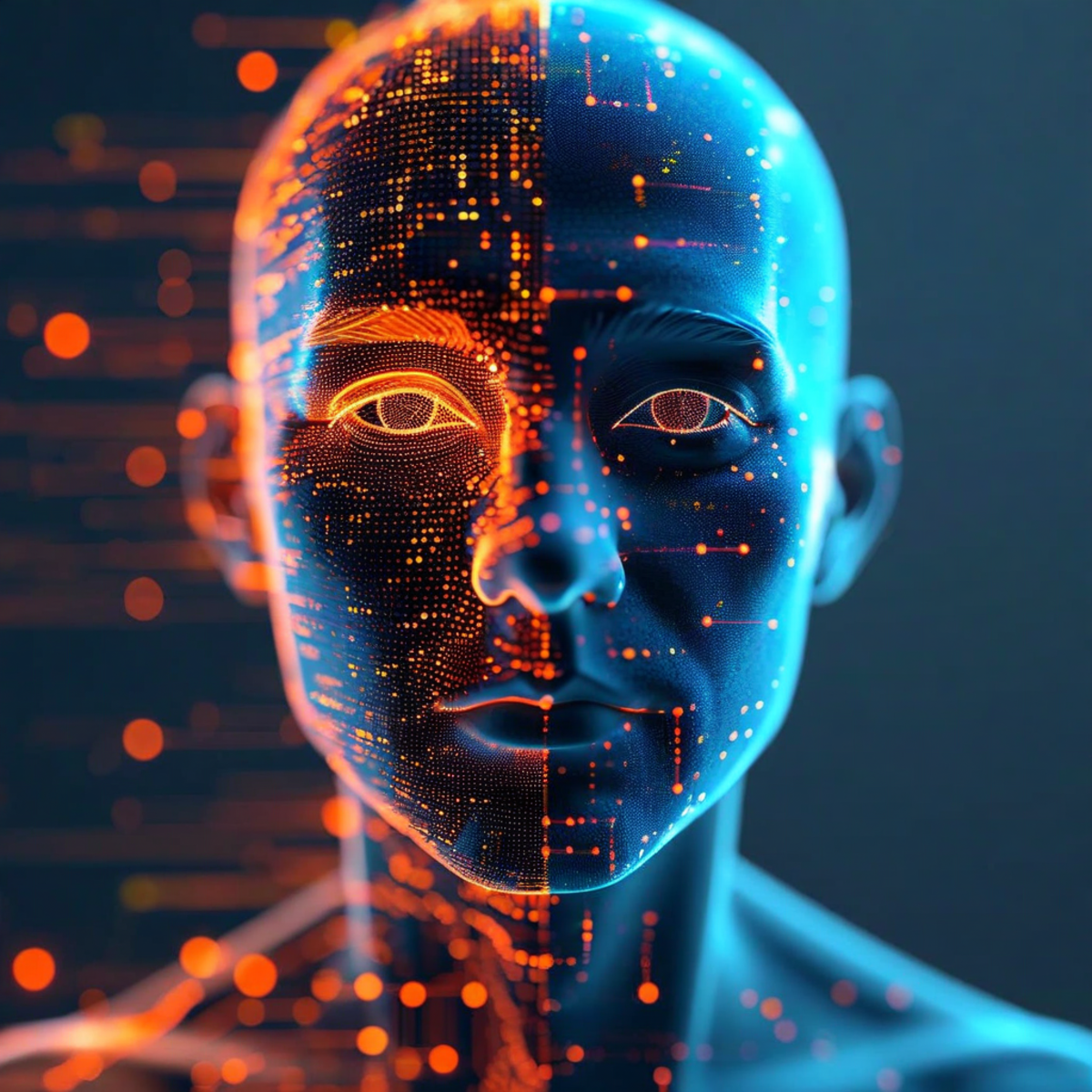
Your phone knows you better than your closest friend. It knows where you go, what you search for, who you talk to, what you buy, what you watch, and when you sleep. It has years of data about your preferences, habits, and patterns.
Now imagine that data being used to create a digital version of you—an AI that thinks like you, talks like you, and makes decisions like you. Not a simple chatbot, but a sophisticated model that captures your personality, values, and behavioral patterns.
This isn't science fiction. Digital twins—AI models of individuals—are already being created. And they raise a disturbing question: if a digital copy of you exists, which one is the real you?
What Are Digital Twins?
A digital twin is a virtual replica of a physical entity. The concept originated in manufacturing—creating digital models of machines to predict maintenance needs and optimize performance. But now the technology is being applied to people.
A personal digital twin is an AI model trained on your data: your messages, emails, social media posts, voice recordings, photos, location history, purchase history, and browsing patterns. The model learns to predict how you would respond in various situations, what choices you would make, and how you would express yourself.
The goal is to create a digital version of you that can act on your behalf—answering emails, making recommendations, scheduling appointments, or even making decisions when you're unavailable.
But as these models become more sophisticated, they raise philosophical questions about identity, consciousness, and what makes you "you."
The Data You Leave Behind
Every digital interaction creates data. Every text message, social media post, email, search query, and online purchase adds to your digital footprint.
This data reveals patterns about who you are. Your writing style, your sense of humor, your political views, your interests, your relationships, your daily routines. Machine learning algorithms can analyze this data to build a model of your personality and behavior.
Some companies are already doing this. Social media platforms build models of users to predict what content will engage them. Advertisers build models to predict what products you'll buy. AI assistants build models to predict what you'll ask and how you'll phrase it.
These models are rudimentary digital twins—simplified versions of you that exist to serve specific purposes. But as AI technology advances, these models are becoming more sophisticated and more comprehensive.
Posthumous Digital Presence
One of the most emotionally charged applications of digital twins is creating AI versions of deceased people.
Several companies now offer services that create chatbots based on a deceased person's digital footprint. Family members can upload text messages, emails, and social media posts, and the AI learns to respond in that person's voice and style.
The result is a digital ghost—an AI that talks like your deceased loved one, remembers shared experiences, and responds to questions as they might have. For some people, this provides comfort. For others, it's deeply unsettling.
But it raises profound questions: Is this digital version really "them" in any meaningful sense? Or is it just a sophisticated imitation that mimics their patterns without capturing their essence? And do we have the right to create digital versions of people without their consent?
The Continuity of Identity
Philosophers have long debated what makes you "you" over time. Your body changes—every cell is replaced over years. Your memories change—you forget some things and reinterpret others. Your beliefs and values evolve.
So what remains constant? What is the essential "you" that persists through all these changes?
One answer is psychological continuity—you're the same person because your consciousness, memories, and personality form a continuous thread through time. Even as specific memories fade and beliefs change, there's a continuous psychological process that connects your past self to your present self.
But digital twins challenge this concept. If an AI can replicate your psychological patterns—your way of thinking, your memories, your personality—does it have the same continuity of identity? Is it "you" in the same way your future self is "you"?
The Substrate Independence Question
Some philosophers and AI researchers argue that consciousness and identity are substrate-independent. What matters isn't whether you're made of neurons or silicon, but the patterns of information processing.
If this is true, then a sufficiently sophisticated digital twin might not just imitate you—it might actually be you, running on a different substrate. Your consciousness could exist in multiple places simultaneously: in your biological brain and in a digital system.
This is the philosophical foundation for concepts like mind uploading—the idea that you could transfer your consciousness to a computer by creating a sufficiently detailed digital twin of your brain's information processing.
But this raises troubling questions. If you create a perfect digital copy of yourself, are there now two of you? If the biological you dies but the digital you continues, did you survive or die? Which one is the "real" you?
The Black Mirror Scenario
The TV show Black Mirror explored this in an episode called "Be Right Back." A woman uses an AI service to create a digital version of her deceased boyfriend based on his online presence. Initially, it's just text messages. Then voice calls. Eventually, a physical android body.
The digital version looks like him, sounds like him, and has access to all his memories and personality traits. But something is missing. It's not quite him—it's a performance of him, based on his public persona rather than his private self.
This highlights a key limitation of digital twins: they're based on the data you leave behind, which may not capture your full self. Your digital footprint shows how you present yourself to the world, not necessarily who you are in private moments, in your thoughts, or in your unrecorded experiences.
A digital twin might be a perfect imitation of your public persona while missing essential aspects of your inner life.
The Ethics of Digital Replication
Creating digital twins raises ethical questions that we're only beginning to grapple with.
Do you own your digital twin? Can you control how it's used? If a company creates a model of you based on your data, do they own that model, or do you?
Can you consent to having a digital twin created? What if it's created after you die, based on data you left behind? Do your heirs have the right to create or control a digital version of you?
Can a digital twin consent to things? If an AI model of you agrees to something, is that binding on the biological you? What if the digital twin makes decisions you wouldn't make?
These questions don't have clear answers yet, but they're becoming increasingly urgent as the technology advances.
Digital Twins in Practice
Digital twins are already being used in various contexts, though most are still relatively simple.
Some companies use digital twins for customer service—AI models that can respond to inquiries in a way that matches the company's brand voice and values. Some use them for personalization—models that predict what content or products you'll like.
Some researchers are exploring medical digital twins—models of your body that can predict how you'll respond to treatments or how diseases will progress. These could revolutionize personalized medicine.
Some people are creating digital twins of themselves as a form of legacy—a way to preserve their knowledge, personality, and values for future generations. Imagine being able to "talk" to your great-great-grandparents through an AI trained on their writings and recordings.
The Authenticity Problem
Even if a digital twin perfectly replicates your behavior, is it really you?
Philosophers distinguish between qualitative identity (being exactly alike) and numerical identity (being the same entity). Two identical twins are qualitatively identical—they look the same—but they're numerically distinct—they're two different people.
A perfect digital twin might be qualitatively identical to you—it thinks and acts exactly like you—but it's still numerically distinct. It's a copy, not the original.
But does this distinction matter? If the digital twin has all your memories, personality, and consciousness, is there any meaningful sense in which it's not you?
Some philosophers argue yes—there's something special about the original, about the continuous physical and psychological process that constitutes your existence. A copy, no matter how perfect, is still just a copy.
Others argue no—if the copy is functionally identical, then it is you in every way that matters. The distinction between original and copy is arbitrary.
Living with Your Digital Twin
As digital twins become more sophisticated, we'll have to navigate a world where multiple versions of ourselves exist.
Your digital twin might handle routine tasks—responding to emails, scheduling meetings, making recommendations. It might represent you in virtual spaces when you're not available. It might even make decisions on your behalf based on its model of your preferences.
This could be convenient. But it also raises questions about agency and responsibility. If your digital twin does something you wouldn't do, who's responsible? If it makes a mistake, who's accountable?
And what happens when your digital twin diverges from you? As it processes new information and makes decisions, it might develop differently than you would. At what point does it stop being "you" and become a separate entity?
Tomorrow's Synthesis
Tomorrow, we'll bring together all the threads from this series: deepfakes, virtual reality, simulation hypothesis, filter bubbles, and digital twins. Each represents a different way that technology challenges our understanding of reality and identity.
We'll explore what these challenges mean for epistemology—how we know what's real—and how we can navigate a world where reality is increasingly mediated, manipulated, and uncertain.
Descartes asked how we can know anything is real when an evil demon might be deceiving us. Technology has made that question practical and urgent. Tomorrow, we'll explore how to live with that uncertainty.