How Do You Know This Is Real? Descartes' Evil Demon and the Brain in a Vat
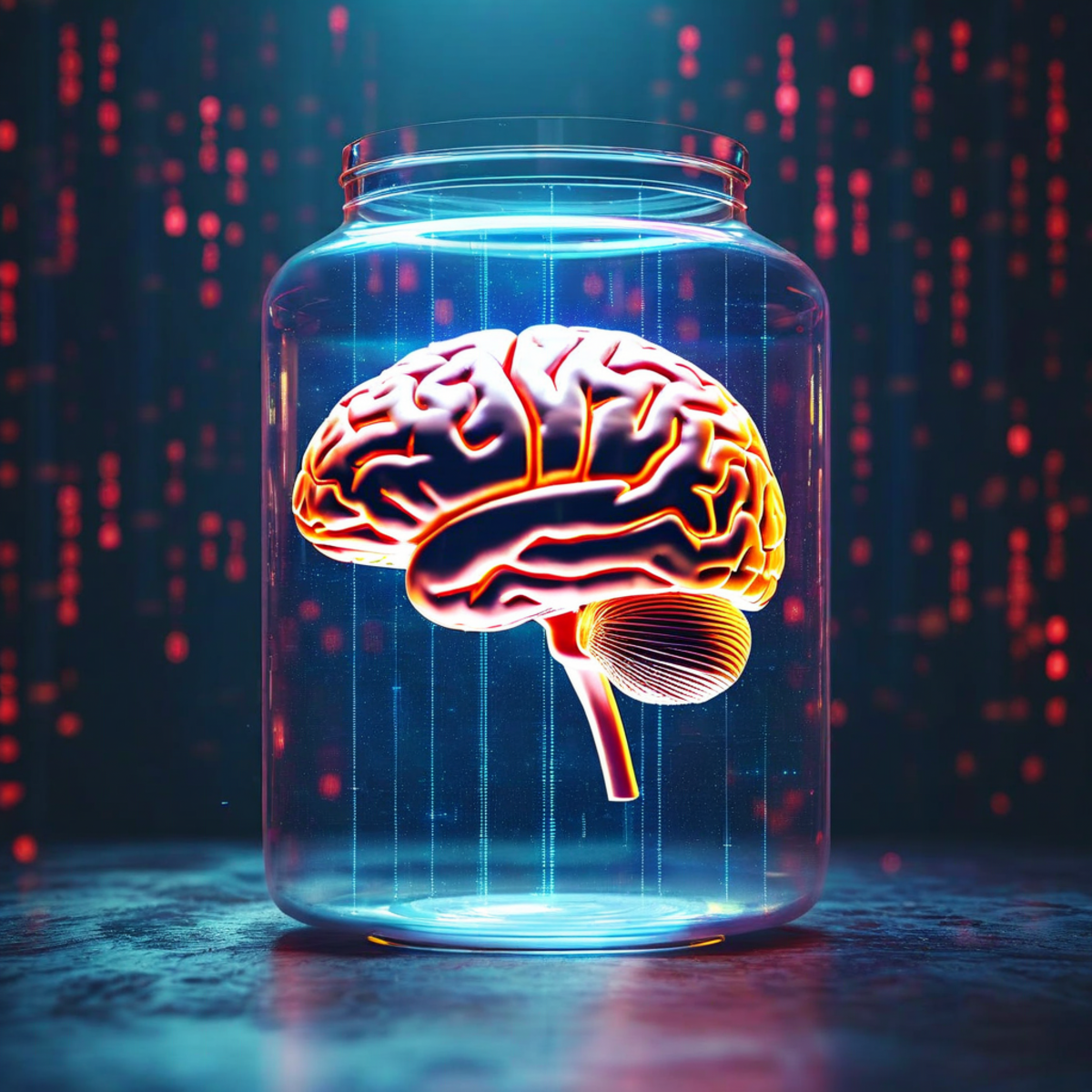
Imagine waking up tomorrow to discover that everything you've ever experienced—every conversation, every sunset, every moment of joy or pain—was an elaborate illusion. Your brain has been floating in a vat of nutrients, connected to a supercomputer that feeds you perfectly convincing sensory experiences. The world you thought was real never existed. Your body, your friends, your entire life—all simulations.
This isn't science fiction. It's a philosophical thought experiment that has haunted thinkers for centuries, and technology is making it disturbingly plausible.
Descartes' Evil Demon
In 1641, René Descartes posed a radical question: What if a powerful, malicious demon was deceiving you about everything? What if all your perceptions—the chair you're sitting on, the screen you're reading, even your own body—were elaborate illusions created by this demon?
Descartes wasn't being paranoid. He was practicing radical skepticism, questioning everything that could possibly be doubted. His goal was to find something absolutely certain, a foundation for knowledge that even the most powerful deceiver couldn't undermine.
His answer became one of philosophy's most famous conclusions: "Cogito, ergo sum"—I think, therefore I am. Even if everything else is illusion, the fact that you're thinking proves you exist. The demon can deceive you about the external world, but it can't deceive you about your own existence as a thinking being.
But Descartes' solution has limits. It proves you exist, but it doesn't prove anything else does. The external world, other people, even your own body—all remain uncertain. You're left with a tiny island of certainty in an ocean of doubt.
The Brain in a Vat
In 1981, philosopher Hilary Putnam updated Descartes' demon for the age of neuroscience. Instead of a supernatural deceiver, imagine a scientist who has removed your brain, placed it in a vat of life-sustaining fluid, and connected it to a supercomputer. The computer feeds your brain electrical impulses identical to those you'd receive from a real body in a real world.
From your perspective, nothing would seem different. You'd still see, hear, feel, taste, and smell. You'd still have thoughts, emotions, and memories. You'd have no way to detect that you're a brain in a vat rather than a person in a body.
This isn't just a thought experiment anymore. We understand enough about neuroscience to know it's theoretically possible. We can stimulate specific brain regions to produce specific experiences. We can create virtual realities that fool our senses. We're not far from being able to create a brain-in-vat scenario.
The Problem of External World Skepticism
Both scenarios illustrate the same fundamental problem: How do you know your perceptions match reality?
Every piece of evidence you have about the external world comes through your senses. But if your senses can be systematically deceived—by a demon, a supercomputer, or any other mechanism—then you can't use sensory evidence to prove your senses are reliable. It's circular reasoning.
This is external world skepticism: the position that we can't have certain knowledge about anything beyond our own minds. We might be brains in vats, characters in a simulation, or victims of an evil demon. We have no way to rule it out.
For centuries, this was considered an abstract philosophical puzzle. Interesting to think about, but not practically relevant. That's changing.
The Simulation Hypothesis
In 2003, philosopher Nick Bostrom formalized what's now called the simulation hypothesis. His argument is simple but profound: If it's possible to create realistic simulations of conscious beings, and if advanced civilizations would want to run such simulations, then statistically, we're almost certainly in a simulation ourselves.
Why? Because one "real" universe could contain millions or billions of simulated universes. If simulations are possible and common, then for every real person, there would be countless simulated people. The odds that you're one of the real ones become vanishingly small.
Elon Musk has claimed the odds we're in "base reality" are "one in billions."[1] Physicists debate whether quantum mechanics and the Planck length suggest reality is discrete—pixelated, like a computer simulation. The simulation hypothesis is Descartes' evil demon updated for the computational age, and it's taken seriously by scientists and philosophers.
Why Technology Makes This Matter
For most of history, brain-in-vat scenarios were purely hypothetical. They illustrated philosophical problems but had no practical implications. That's no longer true.
Technology is making Descartes' thought experiment real:
Deepfakes can create perfectly convincing fake videos of people saying things they never said. Seeing is no longer believing.
Virtual reality creates immersive experiences that can fool your senses. We're voluntarily becoming brains in vats for entertainment.
AI-generated content floods the internet with synthetic text, images, and videos. How do you know what's real?
Social media algorithms curate what you see, creating personalized filter bubbles. Each person experiences a different "reality" based on what the algorithm shows them.
Digital twins and AI chatbots can replicate people's personalities and speech patterns. Which version is "real"?
We're living through an epistemic crisis—a crisis of knowledge. The traditional methods of knowing (perception, testimony, evidence) are all compromised by technology. We can no longer trust our senses, our sources, or our information environment.
The Practical Evil Demon
Descartes' evil demon was a thought experiment. But today, we face practical evil demons:
The algorithm that decides what news you see, shaping your perception of reality.
The deepfake that makes you doubt video evidence.
The AI that generates convincing but false information.
The virtual world that's more appealing than physical reality.
These aren't supernatural deceivers. They're technologies we've created. And unlike Descartes' demon, they're not trying to deceive us about everything—just enough to make us uncertain about what's real.
The Question We Can't Avoid
Descartes could treat his evil demon as a philosophical exercise. We can't. We face practical questions every day:
Is this video real or a deepfake?
Is this news article genuine or AI-generated?
Is this person online real or a bot?
Is my social media feed showing me reality or a curated illusion?
These aren't abstract philosophical puzzles. They're practical problems that affect how we vote, what we believe, and how we understand the world.
Living with Uncertainty
Descartes sought certainty and found it in his own existence. But certainty about the external world eluded him. He ultimately relied on God's benevolence—God wouldn't deceive us, so our senses must be generally reliable.
We don't have that luxury. We know our information environment is filled with deception, manipulation, and illusion. We know our senses can be fooled. We know our perceptions are filtered and curated.
The question isn't whether we can achieve certainty—we can't. The question is whether we can live well without it.
Over the next week, we'll explore how technology has made the brain-in-vat scenario increasingly real. We'll look at deepfakes that undermine visual evidence, virtual realities that replace physical experience, simulation hypotheses that question the nature of reality itself, social media algorithms that create personalized realities, and digital twins that blur the line between authentic and artificial.
Each case illustrates the same problem: technology is making it harder to know what's real. Descartes' evil demon is no longer a thought experiment. It's a practical challenge we face every day.
The question is: How do we navigate a world where we can't be certain what's real? That's what this series will explore.
Test your own skepticism: Before diving deeper into this series, try our Skepticism Scale Quiz to see where you fall on the spectrum from naive realism to radical skepticism.
Continue the series: Explore how technology makes the brain-in-vat scenario real:
- Deepfakes and the Death of "Seeing is Believing"
- Virtual Reality: Choosing the Vat
- Are We Living in a Simulation?
- Filter Bubbles: The Algorithmic Evil Demon
- Digital Twins and the Question of Authenticity
- Synthesis: Living in an Age of Epistemic Uncertainty
References
[1] Jason Koebler, "Elon Musk Says There's a 'One in Billions' Chance Reality Is Not a Simulation," Vice, June 2, 2016. https://www.vice.com/en/article/elon-musk-simulated-universe-hypothesis/