Pascal's Wager and Asteroid Defense: The Cosmic Gamble
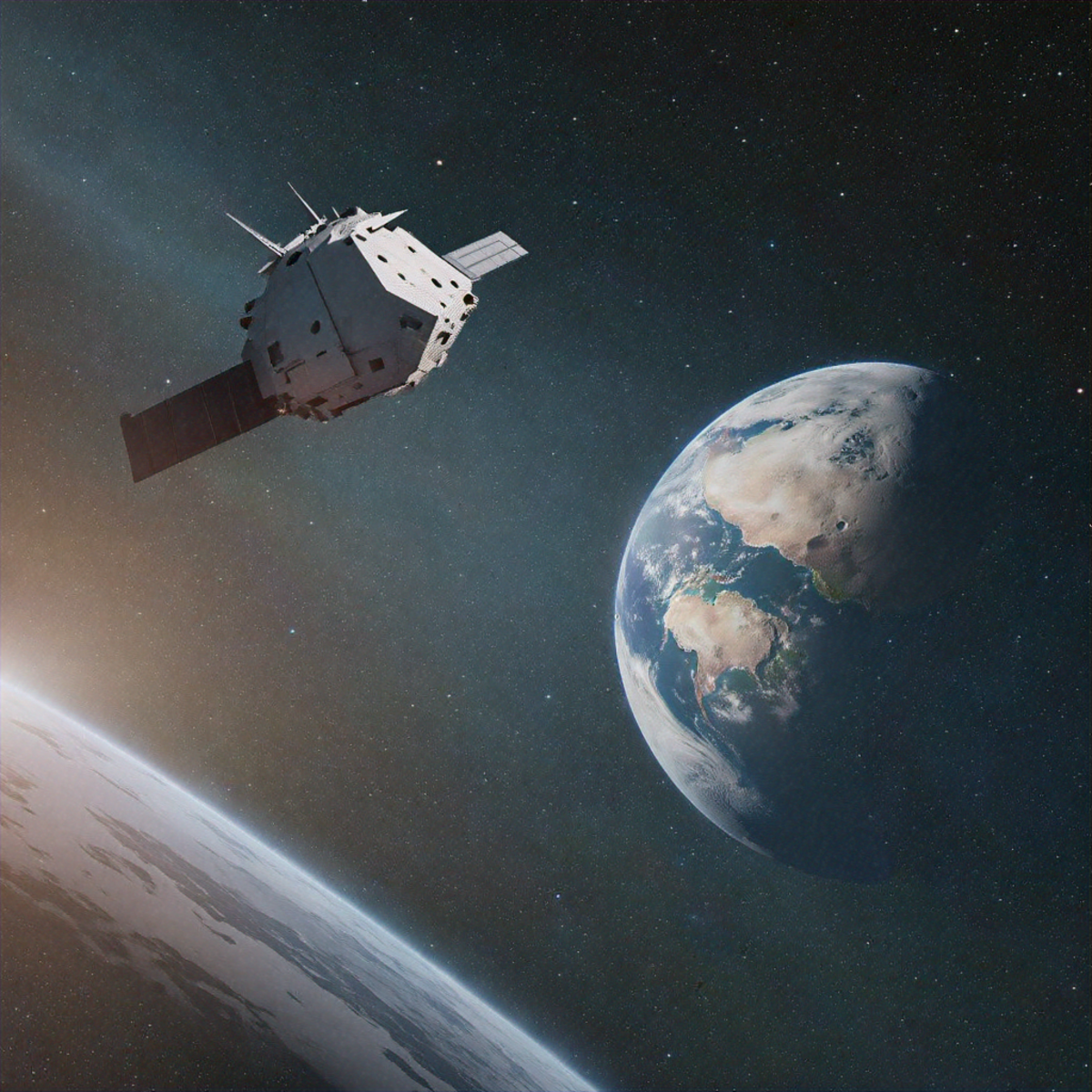
Every day, Earth travels through space at 67,000 miles per hour, threading a path through countless asteroids and comets. Most pass harmlessly. But occasionally, one doesn't. The question isn't whether an asteroid will hit Earth—it's when, and whether we'll be ready.
This is Pascal's Wager in its purest form: an extremely low probability event with potentially extinction-level consequences. We can spend money now on detection and deflection systems that may never be needed, or we can wait and hope we're not the generation that faces catastrophe unprepared.
The asymmetry is stark. The cost of planetary defense is measured in billions. The cost of being wrong is measured in civilizations.
The Probability Problem
Asteroid impacts follow a predictable pattern: small impacts happen frequently, large impacts happen rarely. A Hiroshima-scale impact occurs roughly once per century. A civilization-threatening impact occurs roughly once per million years. An extinction-level impact like the one that killed the dinosaurs occurs roughly once per 100 million years.
These probabilities seem reassuringly low. A 1-in-100-million chance per year translates to a 0.000001% annual risk. By normal risk calculations, this barely registers. We face far more likely threats—pandemics, climate change, nuclear war—that deserve attention first.
But Pascal's Wager doesn't work with normal risk calculations. When the potential outcome is human extinction, even tiny probabilities demand consideration. The expected value calculation breaks down when one outcome is infinite loss.
The question becomes: how much should we spend to prevent a threat that probably won't happen in our lifetimes, or our children's lifetimes, or perhaps for thousands of generations?
The Chelyabinsk Wake-Up Call
On February 15, 2013, a meteor exploded over Chelyabinsk, Russia. The asteroid was only 20 meters across—small by cosmic standards—but it released energy equivalent to 30 Hiroshima bombs. The shockwave injured over 1,500 people and damaged thousands of buildings.[1]
No one saw it coming. The asteroid approached from the direction of the sun, making it invisible to ground-based telescopes. It wasn't on any watch list. We had no warning.
This was a wake-up call. If a 20-meter asteroid can cause that much damage, what would a 100-meter asteroid do? Or a kilometer-wide asteroid? The Chelyabinsk meteor was a reminder that asteroid impacts aren't just ancient history—they're ongoing risks we're not adequately monitoring.
The event catalyzed increased funding for planetary defense. But it also revealed how unprepared we are. We can't detect every threat, and even if we could, we don't have proven deflection capabilities for large asteroids.
Detection vs. Deflection
Planetary defense has two components: finding asteroids before they hit us, and doing something about them if they're on a collision course.
Detection is the easier problem. NASA's Near-Earth Object program has catalogued over 90% of asteroids larger than one kilometer.[2] These are the civilization-enders—large enough to cause global catastrophe. The good news: none are on collision courses with Earth for at least the next century.
But smaller asteroids—the Chelyabinsk-size objects that can devastate cities—are harder to track. There may be millions of them, and we've only catalogued a small fraction. These are too small to cause extinction, but large enough to kill millions if they hit a populated area.
Deflection is the harder problem. We've never actually deflected an asteroid. In 2022, NASA's DART mission successfully altered the orbit of a small asteroid by crashing a spacecraft into it—a proof of concept, but not a full-scale test. For larger asteroids, we'd need more powerful interventions: nuclear explosions, gravity tractors, or kinetic impactors. All are theoretical. None are proven at scale.
This creates an uncomfortable asymmetry: we're getting better at detecting threats we can't yet deflect. We may have decades of warning about an incoming asteroid, but no proven way to stop it.
The Long-Term Thinking Problem
Asteroid defense requires thinking on timescales that humans are notoriously bad at. The threat is real, but it's not urgent. It may not materialize for centuries or millennia. How do you maintain funding and political will for a threat that distant?
This is the challenge of all long-term risks. Climate change operates on decades. Pandemics operate on years. Asteroids operate on millennia. The longer the time horizon, the harder it is to justify present spending.
But the asymmetry remains: if we wait until an asteroid is detected on a collision course, it may be too late to develop deflection technology. Planetary defense requires sustained investment over decades, with benefits that may not materialize for generations.
This is Pascal's Wager extended across time. We're not just betting on our own survival—we're betting on behalf of future generations who can't participate in the decision. The ethical weight is enormous.
The International Cooperation Challenge
Asteroids don't respect national borders. A collision anywhere affects everyone. This makes planetary defense a global public good—everyone benefits, regardless of who pays.
This creates a free-rider problem. Individual nations may underinvest, hoping others will bear the cost. The optimal strategy for any single country might be to let others fund planetary defense while enjoying the protection.
But if everyone thinks this way, no one invests adequately. The result is collective underinvestment in a threat that affects everyone.
International cooperation on asteroid defense has improved. The United Nations established the International Asteroid Warning Network and the Space Mission Planning Advisory Group. NASA's Planetary Defense Coordination Office coordinates with international partners. But funding remains modest, and there's no binding international agreement on who would lead a deflection mission if a threat were detected.
This is Pascal's Wager at the global level: we must cooperate to address a threat that may never materialize, overcoming national interests and free-rider incentives. The asymmetry suggests cooperation is worth it, but achieving it is politically difficult.
How Much Is Enough?
NASA's planetary defense budget is roughly $150 million annually—a tiny fraction of the agency's total budget.[4] Is this enough? Too much? How do we know?
The challenge is that we can't calculate expected value in the normal way. The probability of a catastrophic impact is uncertain. The cost of an impact is potentially infinite (human extinction). The effectiveness of deflection technology is unproven. We're making decisions with incomplete information about low-probability, high-consequence events.
One approach is to compare asteroid defense to other existential risks. Climate change, pandemics, and AI risk all compete for resources. How do we prioritize?
Asteroid defense has some advantages: the threat is well-understood, the physics is clear, and the solution is tractable. We know asteroids exist, we know they can hit Earth, and we have plausible deflection strategies. This is more certain than many other existential risks.
But asteroid defense also has a disadvantage: the probability is extremely low. Even if we do nothing, we'll probably be fine for centuries. Other risks—climate change, pandemics—are more imminent.
The asymmetry suggests some investment is justified. But how much? There's no formula that answers this. It requires judgment about how to weigh present costs against future risks, and how to compare different existential threats.
The Tunguska Precedent
On June 30, 1908, an asteroid or comet exploded over Tunguska, Siberia. The blast flattened 2,000 square kilometers of forest—an area larger than London. If it had hit a populated area, millions would have died.[5]
Tunguska was a reminder that civilization-threatening impacts aren't just theoretical. They happen. The only reason Tunguska wasn't catastrophic is that it hit an unpopulated area. We got lucky.
This is the uncomfortable truth about asteroid defense: we've been lucky so far. Chelyabinsk injured people but didn't kill anyone. Tunguska hit an empty forest. The dinosaur-killer asteroid hit 66 million years ago, before humans existed. We've never faced a major impact as a technological civilization.
But luck isn't a strategy. The question is whether we'll invest in planetary defense before our luck runs out, or whether we'll wait until after a catastrophe to take the threat seriously.
The DART Mission: A Successful Bet
In September 2022, NASA's DART spacecraft deliberately crashed into the asteroid Dimorphos, successfully altering its orbit.[3] This was the first demonstration of kinetic impact deflection—proof that we can change an asteroid's trajectory if we detect it early enough.
DART represents a successful Pascal's Wager: we spent $330 million on a mission that tested technology we hope never to use in earnest. The mission didn't prevent any actual threat—it was purely a test. But it proved that deflection is possible, giving us a tool we might need someday.
This is the value of preparedness: DART didn't save us from an immediate threat, but it gave us capability and knowledge. If we detect a dangerous asteroid decades from now, we'll have proven technology to respond. Without DART, we'd be starting from scratch.
The mission also revealed limitations. DART worked on a small asteroid with decades of warning. For larger asteroids, or shorter warning times, we'd need more powerful interventions. The test was a success, but it's not a complete solution.
The Apophis Close Approach
In 2029, the asteroid Apophis will pass within 32,000 kilometers of Earth—closer than some satellites. It won't hit us, but it will be visible to the naked eye as it streaks across the sky.
Apophis is 340 meters across—large enough to devastate a region if it hit. When it was first discovered in 2004, there was a small probability it might hit Earth in 2029 or 2036. Further observations ruled out impact, but the initial uncertainty was a reminder of how quickly our risk assessment can change.
The 2029 flyby will be a unique opportunity. Scientists will study Apophis up close, learning about asteroid composition and behavior. The event will also be a public reminder that asteroid impacts are real threats, not just science fiction.
This is Pascal's Wager made visible: a close approach that reminds us why planetary defense matters, even though this particular asteroid poses no threat. The question is whether the reminder will translate to sustained investment, or whether attention will fade once Apophis passes safely.
The Ethical Weight of Future Generations
Asteroid defense is unusual among Pascal's Wagers because the beneficiaries are primarily future generations. We're spending money now to protect people who won't be born for centuries or millennia.
This raises ethical questions: how much do we owe to future generations? How do we weigh their interests against present needs? If we spend billions on asteroid defense, that's money not spent on healthcare, education, or poverty reduction today.
Some philosophers argue we have strong obligations to future generations—they'll exist, they'll have interests, and we have the power to protect them. Others argue that present needs should take priority—we can't sacrifice the living for the hypothetical.
Pascal's Wager doesn't resolve this debate. It tells us that extreme outcomes warrant action despite uncertainty, but it doesn't tell us how to balance present and future interests. That requires moral judgment, not just risk calculation.
The Limits of Precaution
Asteroid defense reveals a limit of Pascal's Wager logic: we can't prepare for every low-probability catastrophe. Resources are finite. We must prioritize.
Asteroids compete with other existential risks: supervolcanoes, gamma-ray bursts, rogue black holes, vacuum decay. Each has tiny probability and catastrophic consequences. If we take Pascal's Wager seriously for asteroids, shouldn't we take it seriously for all of them?
But we can't. We must make choices about which risks warrant investment. Asteroid defense has advantages—the threat is well-understood, the solution is tractable, and the probability, while low, is higher than many other cosmic risks.
This is the practical challenge of Pascal's Wager: it tells us to act on asymmetric risks, but it doesn't tell us which ones to prioritize when we can't address them all.
The Cosmic Perspective
Asteroid impacts are a reminder of our cosmic vulnerability. Earth exists in a shooting gallery. We've been hit before, and we'll be hit again. The only question is when.
This perspective is both humbling and empowering. Humbling because it reminds us how fragile civilization is—a single asteroid could end everything we've built. Empowering because, unlike the dinosaurs, we have the technology to see threats coming and potentially deflect them.
Planetary defense is humanity's first attempt to protect itself from cosmic threats. It's a remarkable achievement: we're developing the capability to alter the trajectory of asteroids, to change the course of celestial mechanics. This is technology on a planetary scale.
But it's also a reminder of how much we don't know. We've catalogued most large asteroids, but millions of smaller ones remain undetected. We've tested deflection on a small scale, but we don't know if it would work on a large asteroid with short warning time. We're learning, but we're not yet fully prepared.
The Wager We're Already Making
Whether we realize it or not, we're already taking Pascal's Wager on asteroid defense. By investing in detection and deflection, we're betting that the cost of preparation is worth the benefit of protection, even if the threat never materializes.
The question isn't whether to take the wager—we're taking it. The question is whether we're betting enough. Is $150 million annually adequate for a threat that could end civilization? Or should we invest more, treating asteroid defense as seriously as we treat other existential risks?
There's no formula that answers this. It requires judgment about probability, consequence, and opportunity cost. But Pascal's insight remains valuable: when the stakes are potentially infinite, we can't simply ignore low-probability threats. We must act, even with uncertainty.
The future is a wager we're all making. The question is whether we're making it wisely—and whether we'll be ready when the next asteroid comes.
References
[1] "What was the Chelyabinsk meteor event?" The Planetary Society. https://www.planetary.org/articles/what-was-the-chelyabinsk-meteor-event
[2] "NASA's Planetary Defense: Near-Earth Object Observations Program," NASA. https://www.nasa.gov/planetarydefense/neoo
[3] "NASA's DART Mission Hits Asteroid in First-Ever Planetary Defense Test," NASA, September 26, 2022. https://www.nasa.gov/press-release/nasa-s-dart-mission-hits-asteroid-in-first-ever-planetary-defense-test
[4] "How NASA's Planetary Defense Budget Grew," The Planetary Society. https://www.planetary.org/articles/nasas-planetary-defense-budget-growth
[5] "The Tunguska explosion rocked Siberia 117 years ago," EarthSky, June 30, 2025. https://earthsky.org/space/what-is-the-tunguska-explosion/