Why Gig Economy Workers Can't Win
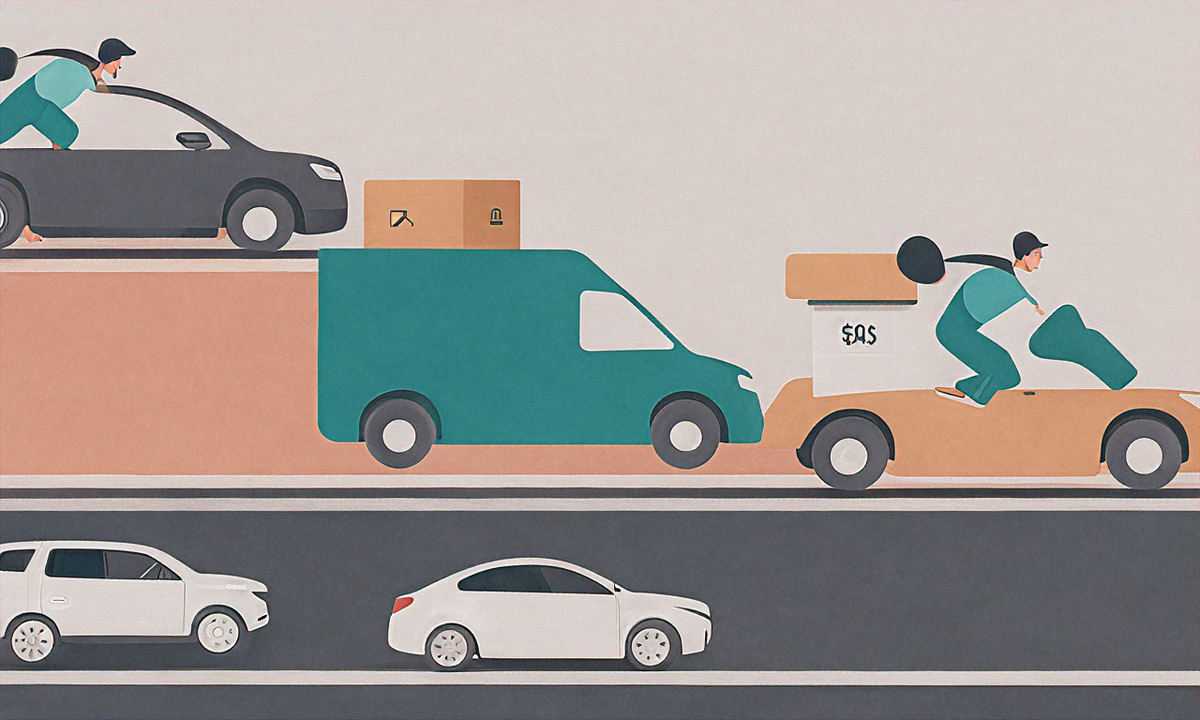
Open a rideshare app at 6 AM on a Tuesday. Dozens of drivers are already online, competing for the same morning commute fares. Each driver faces a choice: accept a ride that pays less than they'd like, or wait for a better offer that might never come. Meanwhile, the driver next to them accepts the low-paying ride. Then another. And another.
By noon, the "market rate" may have dropped. Not because riders are paying less, but because drivers are competing against each other in a race to the bottom that none of them can easily win. This is the prisoner's dilemma of the gig economy.
The Platform's Invisible Hand
The gig economy promised freedom and flexibility. Be your own boss. Work when you want. Set your own hours. But there's a catch that game theory predicted decades ago: when workers compete individually in a platform-controlled marketplace, rational self-interest can lead to collectively worse outcomes.
Here's the dilemma: If all gig workers refused rides below a certain rate, they'd collectively earn more. But each individual worker benefits from accepting the low-paying ride that others reject. The platform wins either way—someone typically accepts. The workers, competing against each other rather than negotiating collectively, may drive their own wages down.
This pattern appears across rideshare, delivery, freelance, and micro-task platforms—wherever individual workers compete for platform-mediated work.
The Payoff Matrix of Platform Work
Consider two delivery drivers, Alice and Bob, both waiting for orders in the same area. A low-paying delivery appears—$4 for 6 miles, barely covering gas.
If both reject it, the platform might increase the payout, and both benefit from higher wages. But if Alice rejects it and Bob accepts, Bob gets the income while Alice gets nothing. The rational choice for each individual driver is to accept—even though they'd both be better off if neither did.
Multiply this scenario by millions of workers making thousands of decisions daily, and you get systematic downward pressure on wages that no individual worker can easily resist. The platform sets the rules, controls the information (you typically don't know what other drivers are offered), and captures the value created by worker competition.
Algorithmic Management Prevents Coordination
Traditional labor markets had a solution to this problem: collective bargaining. Workers organize, negotiate as a group, and establish wage floors. But gig platforms make this kind of coordination difficult.
On most platforms, you don't know who the other drivers are. You typically can't communicate with them. You don't see what they're being offered or what they're accepting. The algorithm mediates every interaction, keeping workers atomized and unable to coordinate. Even if you wanted to organize, platform terms of service often prohibit it, and the constant churn of workers makes sustained organizing challenging.
Some platforms use surge pricing to attract more drivers to high-demand areas, then drop the surge as soon as enough drivers arrive—creating competition that can drive down per-ride earnings. Drivers chase the surge, competing against each other, while platforms optimize for their own metrics.
The California Proposition 22 Case Study
In 2019, California passed AB5, a law that would classify gig workers as employees rather than independent contractors—giving them minimum wage protections, benefits, and the right to organize. The response from major gig platforms was significant.
A coalition of platforms spent over $200 million on Proposition 22, a ballot measure to exempt themselves from AB5.[3][4] It became the most expensive ballot measure in California history. The measure passed, and gig workers remained independent contractors.
The substantial investment suggests how valuable the current model is to platforms. If workers could organize and bargain collectively, the business model would need fundamental restructuring. The system depends on workers competing against each other rather than cooperating.
Platforms argued that drivers wanted flexibility and independence. Many did. But the prisoner's dilemma explains why individual preferences may not matter—even drivers who want higher wages can be forced to accept lower ones when competing against others who will.
The Global Race to the Bottom
The prisoner's dilemma intensifies when platforms operate globally. Freelance platforms connect clients with workers worldwide, creating competition between a developer in San Francisco and one in Bangalore. Both might be skilled, but the San Francisco developer may struggle to compete on price with someone whose cost of living is a fraction of theirs.
Micro-task platforms exemplify this dynamic. Tasks that once paid more now pay significantly less in many cases because someone, somewhere, will accept the lower rate. Research has found that workers on some micro-task platforms earn median wages well below minimum wage—because the platforms enable global competition with no wage floor.[5]
Each worker makes a rational choice: earn a low wage or earn nothing. Collectively, they've created a labor market that may pay less than subsistence wages in many regions. The platform captures value, clients get cheap labor, and workers are trapped in a prisoner's dilemma they can't easily escape individually.
Platform Power Asymmetry
The fundamental asymmetry in gig platforms is information and power. Platforms typically know:
- How many workers are available
- What rates workers have historically accepted
- Demand patterns and pricing opportunities
- Which workers are most likely to accept low-paying jobs
- How low they can push rates before workers quit
Workers typically know almost none of this. They often see one offer at a time, make individual decisions with incomplete information, and compete against an invisible crowd of other workers. Platforms can use this information asymmetry to optimize their own metrics while workers optimize with limited visibility.
Some platforms have faced controversies around payment transparency. In one case, investigative reporting revealed that a platform was using customer tips to subsidize its own base pay—if a customer tipped $10, the platform would reduce its payment by $10. Workers didn't know this was happening until journalists exposed it.[1][2] The platform had information; workers didn't.
The Illusion of Entrepreneurship
Gig platforms often market themselves as enabling entrepreneurship—you're not an employee, you're a business owner! But this framing may obscure the prisoner's dilemma. Traditional entrepreneurs can differentiate their services, set their own prices, and build customer relationships. Gig workers typically can do none of these things.
On many platforms, you can't charge more than other drivers—the platform sets the rate. You often can't build a customer base—the platform controls customer relationships. You typically can't differentiate your service—the platform standardizes everything. You're a worker in a system that often prevents collective bargaining while maintaining the classification of independence.
This matters because it often shifts risk from the platform to the worker. Typically no guaranteed income, no benefits, no unemployment insurance, no workers' compensation. When demand drops, workers often bear the cost. When a car breaks down, workers bear the cost. When the algorithm changes, workers bear the cost. Platforms may capture upside while workers absorb downside.
Why Individual Solutions Fail
Some gig workers try to game the system—multi-apping (running multiple platforms simultaneously), cherry-picking high-value orders, or working only during peak pricing. These strategies can help individual workers, but they don't solve the collective problem. In fact, they may make it worse.
When experienced drivers cherry-pick, newer drivers are left with low-paying orders, potentially driving them out of the market or forcing them to accept even worse rates. When drivers multi-app, platforms may respond by penalizing those who reject too many orders. The system adapts to individual optimization strategies, maintaining the prisoner's dilemma.
Collective action could provide a solution—but that's exactly what the platform structure makes difficult.
The Path Forward: Changing the Game
So how might we escape this prisoner's dilemma? Game theory offers some potential approaches:
Change the payoff structure through regulation: Minimum wage laws, benefits requirements, and employee classification could change the game from a prisoner's dilemma to one where cooperation (or at least fair wages) is enforced. This is what AB5 attempted and what Prop 22 defeated.
Enable communication and coordination: If workers can communicate, organize, and coordinate, they might escape the dilemma. This requires either platforms allowing it or external organizing tools and legal protections for collective action.
Create alternative platforms: Worker-owned cooperatives change the ownership structure so workers aren't competing against each other for a platform's profit. Some photography and music streaming cooperatives have experimented with this model.
Transparency requirements: If workers knew what others were being offered and accepting, they could make more informed decisions and potentially coordinate informally. Platforms may resist this because information asymmetry provides competitive advantage.
The Stakes
The gig economy isn't a small corner of the labor market anymore. Millions of workers depend on platform income, and the model is expanding into more industries—healthcare, education, professional services. If we don't address the prisoner's dilemma at the heart of gig work, we may be building an economy where workers compete in a race to the bottom while platforms capture ever more value.
The prisoner's dilemma teaches us that individual rationality can lead to collective irrationality. The gig economy demonstrates this principle. Each worker makes the rational choice—accept the low-paying gig or earn nothing—and collectively, they create a labor market that primarily benefits the platforms.
The question isn't whether gig workers are making rational choices. They are. The question is whether we'll build systems that make cooperation possible, or whether we'll continue to design platforms that profit from worker competition. The prisoner's dilemma isn't inevitable—it's a design choice. And we can choose differently.
References
[1] Russell Brandom, "Instacart revises controversial pay policy after accusations of tip stealing," The Verge, February 6, 2019. https://www.theverge.com/2019/2/6/18214335/instacart-reverse-controversial-pay-policy-tip-stealing
[2] Kaitlyn Tiffany, "DoorDash pockets workers' tips. Instacart's policy isn't much better," Vox, July 22, 2019. https://www.vox.com/the-goods/2019/7/22/20703636/doordash-instacart-tip-policy
[3] Kate Conger, "Proposition 22 Explained: Impact on Uber, Lyft, Instacart, DoorDash," Business Insider, November 4, 2020. https://www.businessinsider.com/proposition-22-faq-impact-uber-lyft-instacart-doordash-2020-11
[4] "2020 California Proposition 22," Wikipedia. https://en.wikipedia.org/wiki/2020_California_Proposition_22
[5] Kotaro Hara et al., "A Data-Driven Analysis of Workers' Earnings on Amazon Mechanical Turk," CHI Conference on Human Factors in Computing Systems, 2018. https://dl.acm.org/doi/10.1145/3173574.3174023