When Does AI Become Intelligent?
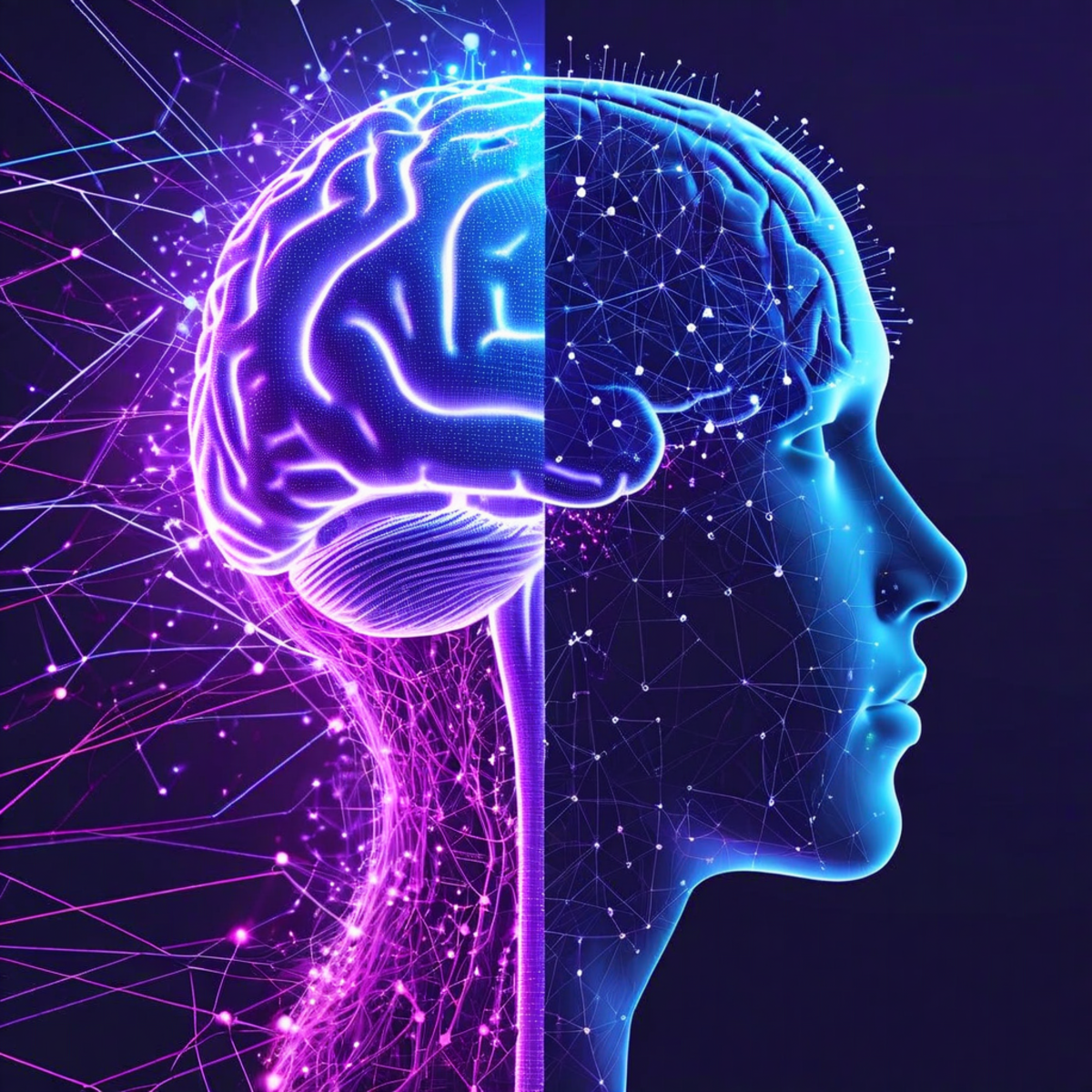
A chatbot answers your question. Is it intelligent?
It can write code, explain complex topics, and hold conversations. But it's just pattern matching, right? Just predicting the next word based on training data.
Add more parameters. More training data. More computational power. The responses get better. More nuanced. More creative.
At what point does it become intelligent?
You can't point to a specific capability and say "this is where intelligence begins." Yet you know that something has changed. Somewhere between simple pattern matching and human-like reasoning, a transformation happened. But where?
This is the Sorites paradox applied to artificial intelligence. And it's one of the most important questions we face today.
The Capability Accumulation Problem
Intelligence isn't a single thing. It's a collection of capabilities.
A system that can:
- Recognize patterns? Not intelligent yet.
- Play chess? Getting closer.
- Understand language? More impressive.
- Generate creative text? Interesting.
- Reason about novel problems? Now we're talking.
- Learn from experience? Even better.
- Explain its reasoning? Remarkable.
But which capability makes it intelligent? Or is it the combination? And if so, which combination?
This is the capability accumulation problem: each individual capability seems insufficient for intelligence, but collectively they might constitute it. We can't identify the exact capability that makes the difference.
The Turing Test Fails
Alan Turing proposed a test: if you can't tell whether you're talking to a human or a machine, the machine is intelligent.
But this test has problems:
Humans can be fooled. ELIZA, a simple 1960s chatbot using pattern matching, convinced some users it was human. Was it intelligent? No.
Intelligence isn't the same as human-like behavior. A system might be intelligent in ways that don't resemble human intelligence. Conversely, mimicking human conversation doesn't require understanding.
The test is binary. You either pass or fail. But intelligence exists on a spectrum. A system can be somewhat intelligent, or intelligent in some domains but not others.
It measures performance, not understanding. A system might generate perfect responses without understanding anything. Is that intelligence?
The Turing Test tries to draw a sharp line where none exists. It's a Sorites problem disguised as a solution.
Narrow vs. General Intelligence
We distinguish between narrow AI and artificial general intelligence (AGI):
Narrow AI excels at specific tasks:
- Chess programs that can't play checkers
- Image recognition that can't understand text
- Language models that can't navigate physical space
AGI would match human-level intelligence across domains:
- Learn new tasks without retraining
- Transfer knowledge between domains
- Reason about novel situations
- Understand context and nuance
But where's the boundary? How many domains must a system master to be "general"? How well must it perform? How quickly must it learn?
A system that's expert in 10 domains but useless in the 11th—is that narrow or general? What about 100 domains? 1,000?
The distinction seems clear in principle but vague in practice. It's another Sorites problem.
The Chinese Room Revisited
Philosopher John Searle proposed the Chinese Room thought experiment:
Imagine you're in a room with a rulebook for manipulating Chinese characters. People slide Chinese questions under the door. You follow the rules to produce Chinese answers and slide them back. To outside observers, the room appears to understand Chinese. But you don't understand a word.
Searle's point: following rules (syntax) isn't the same as understanding (semantics). A computer might process language perfectly without understanding anything.
But here's the problem: how do we know humans aren't just very sophisticated Chinese Rooms? Our neurons follow rules (chemistry and physics). We process inputs and generate outputs. Where does understanding emerge?
Maybe understanding isn't a binary property. Maybe it's something that accumulates gradually as systems become more sophisticated. Maybe the question "does it understand?" is a Sorites problem.
Emergent Behavior
Large language models exhibit emergent behaviors—capabilities that weren't explicitly programmed and that smaller models don't have:
- Few-shot learning (learning from examples)
- Chain-of-thought reasoning
- Code generation and debugging
- Translation between languages
- Mathematical problem-solving
These capabilities emerge at certain scales. A model with 1 billion parameters can't do them. A model with 100 billion parameters can.
But emergence isn't a sharp threshold. It's gradual. As you scale up, capabilities improve incrementally. At some point, they cross from "barely works" to "reliably works." But there's no single parameter count where intelligence suddenly appears.
This is the Sorites paradox in action: each additional parameter seems insignificant, but collectively they transform the system's capabilities.
The Consciousness Question
Is intelligence the same as consciousness? Can something be intelligent without being conscious?
Most researchers say yes—intelligence and consciousness are different. A system could be highly intelligent (solve complex problems, learn, reason) without having subjective experience (qualia, self-awareness, feelings).
But we can't measure consciousness directly. We infer it from behavior. And if a system behaves as if it's conscious—reports having experiences, expresses preferences, claims self-awareness—how do we know it isn't?
The problem: consciousness might also be a Sorites problem. Maybe it's not binary (conscious or not) but a spectrum. Maybe it accumulates gradually as systems become more complex.
If so, we face an uncomfortable question: at what point in AI development do we need to consider the ethical implications of consciousness? When does an AI system deserve moral consideration?
We can't answer this precisely. The boundary is vague.
Real-World Implications
The vagueness of "intelligence" creates practical problems:
Regulation: How do you regulate "intelligent" systems if you can't define intelligence? Do different rules apply at different capability levels? Where do you draw the lines?
Liability: If an AI system makes a mistake, who's responsible? The answer might depend on whether the system is "intelligent enough" to be considered autonomous. But how intelligent is that?
Rights: If we can't define intelligence or consciousness precisely, how do we decide which systems (if any) deserve rights or protections?
Employment: Which jobs require "human intelligence" that AI can't replicate? The answer keeps changing as AI capabilities improve. The boundary keeps moving.
Trust: Should we trust AI systems with important decisions? The answer depends on whether they're "intelligent enough." But that's a vague standard.
These aren't just philosophical puzzles. They're urgent practical questions that require answers, even though the underlying concepts are vague.
The Moving Goalposts
Every time AI achieves something we thought required intelligence, we move the goalposts:
- "Intelligence requires playing chess." → Deep Blue wins. → "That's just brute force search, not real intelligence."
- "Intelligence requires understanding language." → Language models emerge. → "That's just pattern matching, not real understanding."
- "Intelligence requires creativity." → AI generates art and music. → "That's just remixing training data, not real creativity."
- "Intelligence requires reasoning." → AI solves complex problems. → "That's just statistical inference, not real reasoning."
This pattern reveals something important: we don't have a clear definition of intelligence. We know it when we see it in humans, but we can't articulate what it is.
So when AI exhibits intelligent behavior, we rationalize it away. "That's not real intelligence, it's just X." But what is "real" intelligence, if not the ability to do intelligent things?
The goalposts keep moving because intelligence is vague. It's a Sorites problem.
Can We Define Intelligence?
Researchers have proposed many definitions:
- "The ability to achieve goals in a wide range of environments"
- "The capacity to learn and apply knowledge"
- "The ability to reason, plan, solve problems, think abstractly, and learn from experience"
- "The ability to adapt to new situations"
But these definitions are themselves vague. What counts as a "wide range"? How much learning is enough? What level of reasoning qualifies?
Every definition either:
- Sets an arbitrary threshold (Sorites problem)
- Remains vague (doesn't solve the problem)
- Excludes things we'd intuitively call intelligent
- Includes things we'd intuitively call unintelligent
Intelligence might be what philosophers call a "cluster concept"—defined by a collection of features, none of which is necessary or sufficient. You need enough of them, but there's no precise threshold.
This makes intelligence inherently vague. The Sorites paradox applies.
Living with Vagueness
Since we can't define intelligence precisely, what do we do?
Accept the spectrum: Stop treating intelligence as binary. Recognize that systems can be intelligent in some ways but not others, or intelligent to varying degrees.
Focus on capabilities: Instead of asking "is it intelligent?", ask "what can it do?" Evaluate specific capabilities rather than trying to measure general intelligence.
Context matters: Intelligence is relative to tasks and environments. A system might be highly intelligent for some purposes and useless for others.
Avoid anthropomorphism: Don't assume AI intelligence must resemble human intelligence. It might be intelligent in fundamentally different ways.
Embrace uncertainty: We might never have a clear answer to "when does AI become intelligent?" That's okay. We can still make progress without perfect definitions.
Set practical thresholds: For regulation, liability, and other practical purposes, we'll need to draw lines. Acknowledge that these lines are somewhat arbitrary but necessary.
Stay humble: We don't fully understand human intelligence. We shouldn't expect to perfectly define machine intelligence either.
The Meta-Lesson
The question "when does AI become intelligent?" is a Sorites problem. There's no precise boundary. Intelligence accumulates gradually through countless small improvements in capabilities.
This vagueness creates challenges:
- We can't regulate what we can't define
- We can't measure progress toward AGI without clear criteria
- We can't make ethical decisions about AI consciousness without understanding what consciousness is
- We keep moving the goalposts because we don't know where they should be
But the vagueness also reveals something profound: intelligence might not be the kind of thing that has sharp boundaries. It might be inherently gradual, contextual, and multidimensional.
The heap problem has no solution. But understanding it helps us think more clearly about AI, set more realistic expectations, and make better decisions about development and deployment.
We're building systems we can't fully categorize. That's uncomfortable. But it's also the reality we need to navigate.
The question isn't "when will AI become intelligent?" It's "how do we build and govern AI systems when intelligence itself is vague?"
That's the real challenge. And it's one we're facing right now.