Virtual Reality and the Metaverse: Choosing the Vat
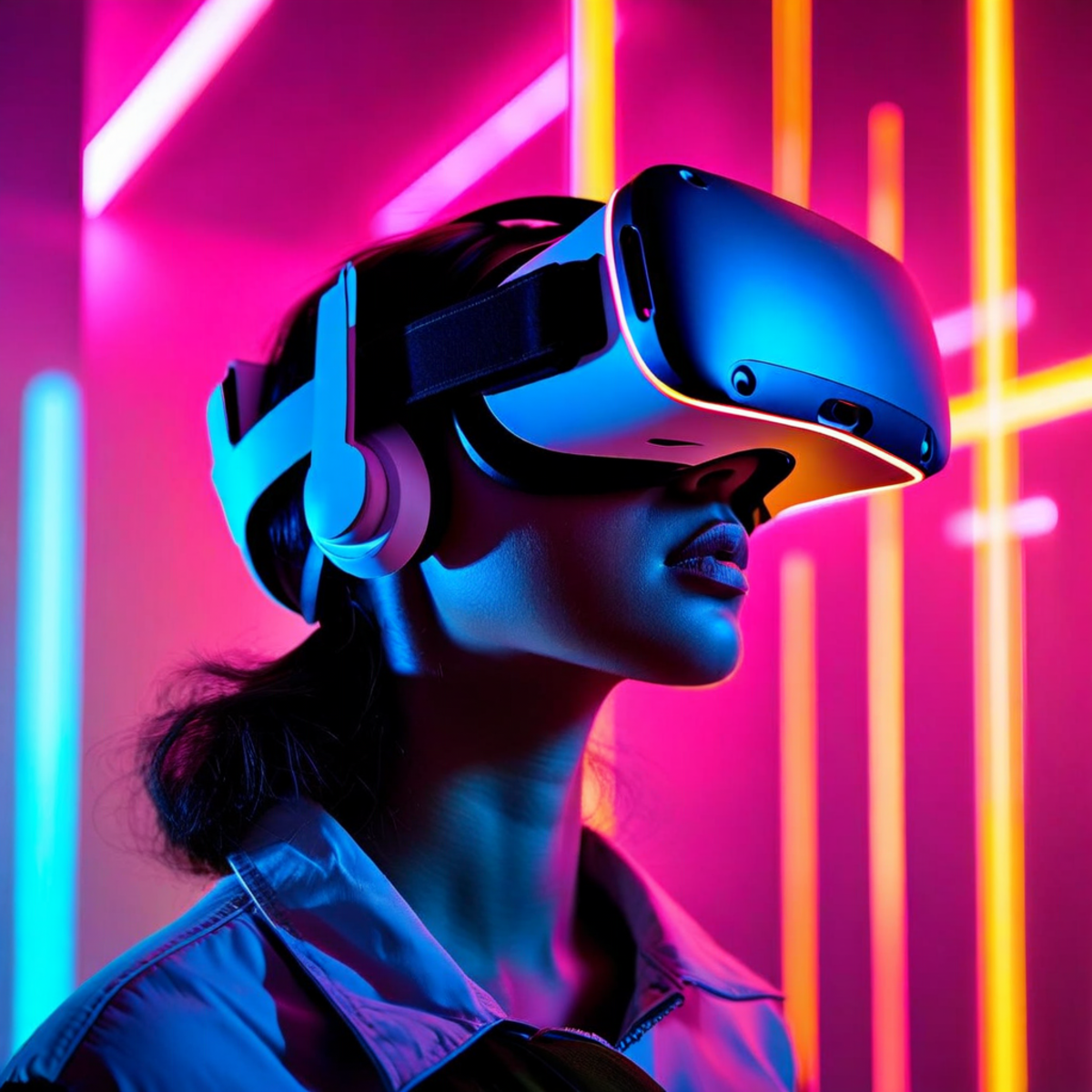
In 1974, philosopher Robert Nozick posed a thought experiment:[1] Imagine a machine that could give you any experience you desired. Perfect happiness, profound accomplishments, deep relationships—all simulated but indistinguishable from reality. Would you plug in?
Most people say no. They want real experiences, not simulated ones. But that was 1974. Today, millions of people voluntarily strap screens to their faces and spend hours in virtual worlds. We're not being forced into the vat—we're climbing in willingly.
The Experience Machine
Nozick's thought experiment was designed to challenge hedonism—the idea that pleasure is all that matters. If pleasure were truly all that mattered, everyone would plug into the experience machine. But most people wouldn't, suggesting we value something beyond just pleasant experiences.
We value authenticity. We want our accomplishments to be real, our relationships genuine, our experiences connected to actual reality. Or at least, we think we do.
But virtual reality technology is testing that intuition. When VR experiences become indistinguishable from physical ones, does the distinction between "real" and "virtual" still matter? If you can't tell the difference, is there a difference?
The Evolution of Virtual Reality
Early VR was crude—low resolution, high latency, nausea-inducing. The gap between virtual and real was obvious. But the technology has improved dramatically.
Modern VR headsets offer high-resolution displays, low latency tracking, and spatial audio. The sense of presence—the feeling of actually being in the virtual space—can be profound. Your brain believes you're somewhere else, even though you know you're not.
Haptic feedback adds touch. VR treadmills add movement. Scent generators add smell. Each advancement closes the gap between virtual and physical experience. We're approaching the point where virtual experiences might be perceptually indistinguishable from real ones.
And then what? If you can't tell you're in VR, are you effectively a brain in a vat?
The Metaverse: Persistent Virtual Worlds
The metaverse concept takes VR further: persistent virtual worlds where people work, socialize, and live. Not just games or experiences, but parallel realities with their own economies, social structures, and cultures.
People already spend significant time in virtual worlds. Second Life, VRChat, Rec Room—these aren't just games, they're social spaces. People form friendships, attend events, create art, and build communities. For many users, these relationships feel as real as physical ones.
Some people prefer their virtual lives to their physical ones. In VR, you can be anyone, do anything, go anywhere. Physical limitations—disability, appearance, location, economics—disappear. The virtual world offers freedoms the physical world doesn't.
Is that escape? Or is it just choosing a different reality?
The Authenticity Question
Here's where it gets philosophically interesting: What makes an experience "authentic"?
If you climb a virtual mountain, is that less meaningful than climbing a physical one? Your brain processes both experiences similarly. The sense of accomplishment, the visual beauty, the physical exertion (if you're using VR treadmills)—all can be present in VR.
The only difference is the substrate. One happens in atoms, the other in bits. But if the experience is identical, why does the substrate matter?
Nozick argued it matters because we value connection to reality. We want our experiences to be caused by actual events, not simulations. But this assumes "actual" and "simulated" are fundamentally different categories.
What if they're not? What if virtual experiences are just as real as physical ones—just in a different medium?
VR Addiction and Reality Preference
The darker side: VR addiction. Some people spend so much time in virtual worlds that their physical lives deteriorate. They neglect work, relationships, health—choosing virtual experiences over physical ones.
Is this addiction? Or rational preference? If someone genuinely prefers their virtual life to their physical one, and the virtual experiences are subjectively indistinguishable from physical ones, is there something wrong with that choice?
We typically say yes—they're "escaping reality." But that assumes physical reality is more real or more valuable than virtual reality. Why should we assume that?
Maybe they're not escaping reality. Maybe they're choosing which reality to inhabit. And if the virtual one offers better experiences, why is that choice irrational?
Full Sensory Immersion
Current VR is limited—primarily visual and auditory. But technology is advancing toward full sensory immersion. Brain-computer interfaces like Neuralink aim to bypass sensory organs entirely, feeding signals directly to the brain.[2]
At that point, the distinction between "real" and "virtual" becomes meaningless from a subjective perspective. If your brain receives identical signals whether you're climbing a physical mountain or a virtual one, the experiences are functionally identical.
This is Nozick's experience machine made real. And unlike his thought experiment, where people said they wouldn't plug in, millions likely will. Because the experiences won't feel fake—they'll feel completely real.
The Voluntary Vat
Here's the key difference between VR and the brain-in-vat scenario: choice. In the traditional thought experiment, you're put in the vat without consent. Your experiences are imposed on you. That's deception.
But VR is voluntary. You choose to enter virtual worlds. You know they're virtual. There's no deception—just a different medium for experience.
Or is there? If you spend most of your time in VR, if your most meaningful relationships are virtual, if your sense of identity is tied to your virtual avatar—are you still choosing? Or have you effectively become a brain in a vat, just one who walked in voluntarily?
Virtual Relationships and Identity
People form deep relationships in VR. They fall in love, build friendships, create communities. Are these relationships less real than physical ones?
The emotional connection is real. The time invested is real. The shared experiences are real. The only thing that's virtual is the medium. But we don't say phone relationships aren't real just because they're mediated by technology. Why should VR relationships be different?
Identity becomes fluid in VR. You can be anyone—different gender, species, appearance. Some people feel more authentically themselves in VR than in physical reality. Their virtual identity feels more real than their physical one.
Which raises the question: What is your "real" identity? The physical body you were born with? Or the identity you choose and inhabit? If you spend more time as your virtual avatar than your physical self, which one is the real you?
The Simulation Within the Simulation
Here's where it gets recursive: What if we're already in a simulation, and VR is a simulation within that simulation? If the simulation hypothesis is true, then "physical reality" is already virtual. VR would just be another layer.
This might sound absurd, but it highlights a deeper point: the distinction between "real" and "virtual" might not be as clear as we think. Reality is what we experience. If we experience virtual worlds as real, they are real—at least to us.
The question isn't whether VR is real. It's whether being real in a different way makes it less valuable.
The Ethics of Virtual Worlds
If virtual experiences are as real as physical ones, they raise ethical questions:
Can you harm someone in VR? If the psychological impact is real, does it matter that the medium is virtual?
Do virtual beings have rights? If AI characters in VR become sophisticated enough to seem conscious, do we have obligations to them?
Is it ethical to prefer virtual life to physical life? If someone chooses to spend all their time in VR, are they harming themselves? Or just making a different choice about how to live?
These aren't hypothetical questions. They're becoming practical as VR becomes more immersive and more central to people's lives.
Living in Multiple Realities
Perhaps the future isn't choosing between physical and virtual reality, but inhabiting both. We already do this to some extent—we move between physical spaces, digital spaces, and social spaces fluidly.
VR just makes the digital spaces more immersive. Instead of looking at a screen, you're inside the space. But the principle is the same: we inhabit multiple realities, and all of them are real in their own way.
The brain-in-vat scenario assumes there's one true reality and everything else is illusion. But maybe there are multiple realities, and we can choose which ones to inhabit. Physical reality is one. Virtual reality is another. Neither is more "real" than the other—they're just different.
The Philosophical Shift
This represents a fundamental shift in how we think about reality. The traditional view: there's one objective reality, and our goal is to perceive it accurately. Anything else is illusion or deception.
The VR view: there are multiple realities, and we can choose which ones to inhabit. What matters isn't whether something is "objectively real," but whether it provides meaningful experiences.
This is pragmatism applied to metaphysics. Reality is what works, what provides value, what enables meaningful life. If virtual experiences do that, they're real enough.
Nozick's Question Revisited
Would you plug into the experience machine? In 1974, most people said no. But that was before VR, before the internet, before we spent hours each day in digital spaces.
Today, we're already plugged in. We just call it technology, not an experience machine. And we're moving toward more immersive versions—VR, AR, brain-computer interfaces.
The question isn't whether we'll plug in. We already have. The question is: how deep do we go? And at what point does choosing virtual experiences over physical ones stop being a choice and start being a trap?
The Paradox of Choice
Here's the paradox: VR offers unlimited freedom—you can be anyone, do anything, go anywhere. But that freedom might trap you. If virtual experiences are always better than physical ones, you'll never choose physical reality. You'll spend all your time in VR.
Is that freedom? Or is it a gilded cage? You're not forced to stay in VR, but you'll never want to leave. You're a brain in a vat, but you put yourself there.
Descartes worried about an evil demon deceiving you. But what if the demon isn't evil? What if it just offers you better experiences than reality does? Would you still resist? Or would you embrace the deception?
The Future of Experience
VR technology will continue improving. Eventually, virtual experiences will be indistinguishable from physical ones. At that point, the distinction between "real" and "virtual" becomes purely philosophical, not experiential.
We'll have to decide: Do we value physical reality for its own sake? Or do we value experiences, regardless of their substrate? If it's the latter, then VR isn't escape from reality—it's expansion of reality.
Tomorrow, we'll explore an even more unsettling possibility: What if we're already in a simulation? What if physical reality itself is virtual? The simulation hypothesis takes the brain-in-vat scenario from thought experiment to serious scientific possibility.
But VR shows us something important: even if we are in a simulation, it might not matter. If the experiences are real to us, if the relationships are meaningful, if the life is worth living—does it matter whether it's happening in atoms or bits?
Maybe the question isn't "Are we brains in vats?" but "Would it matter if we were?" And VR is teaching us that the answer might be no.
References
[1] Robert Nozick, Anarchy, State, and Utopia, Basic Books, 1974, pp. 42-45. See also: "Experience Machine," Internet Encyclopedia of Philosophy. https://iep.utm.edu/experience-machine/
[2] Nicole Wetsman, "Elon Musk's Neuralink: what's science and what's not," The Verge, September 29, 2020. https://www.theverge.com/2020/9/29/21493224/elon-musk-neuralink-neuroscience-brain-machine