Living with the Question: Intelligence, Understanding, and What We Owe Our Machines

In 1980, a philosopher imagined himself locked in a room, shuffling symbols he didn't understand, producing perfect Chinese he couldn't read. Forty-six years later, we've built the room. It sits in data centers, answers our questions, writes our code, drafts our emails, and passes our exams. And we still don't know whether anyone is home.
John Searle's Chinese Room argument was designed to refute a specific claim: that running the right program is sufficient for understanding. He wanted to show that syntax, the manipulation of symbols according to rules, never adds up to semantics, the grasp of what those symbols mean. His thought experiment was aimed at the symbolic AI of his era, systems that manipulated hand-coded logical rules. It turned out to describe, with uncanny precision, the large language models that would arrive four decades later. These systems take in tokens, process them according to learned statistical patterns, and produce tokens that look exactly like understanding. Whether they possess it is the question this series has circled from five directions.
What the Series Revealed
Each post examined a different face of the same problem.

The question of language models asked whether LLMs are the room made real. The "stochastic parrot" critique holds that they generate plausible text without comprehension, the way a parrot produces speech without meaning. The counter-argument points to emergent capabilities, internal world models, and performance on tasks designed to test understanding. Neither side can close the case, because the Chinese Room shows that behavioral evidence, however impressive, is compatible with zero understanding.
The grounding problem asked whether understanding can exist without a connection to the world. Searle in the room has never seen China, tasted its food, or heard its language spoken. LLMs have never experienced anything at all. They know the world only through language about the world, a dictionary written in a language whose words point only to other words. Whether that closed loop of symbols can ever mean anything, or whether meaning requires contact with reality, remains genuinely open. Multimodal models and embodied robots complicate the picture without resolving it.
The creativity test asked whether a system that doesn't understand can make genuinely creative work. AI produces images, music, and prose that move people, that win competitions, that people cannot distinguish from human work. If creativity requires understanding, and AI creates, then either it understands, or creativity doesn't require understanding, or what it makes isn't genuinely creative despite appearances. Each answer is uncomfortable.
The trust problem asked how we should rely on systems whose understanding is uncertain. A system that genuinely understands can recognize the limits of its competence. A system that manipulates symbols cannot, because it has no concept of what the symbols mean. Hallucinations aren't malfunctions in a system that understands. They're the expected output of a system that produces plausibility without any concept of truth. That shapes where these systems are safe to deploy and where they are dangerous.
The criteria question asked what would count as evidence of understanding if behavior isn't enough. Proposals include causal reasoning, calibrated self-knowledge, transfer to novel situations, genuine surprise, and intentional behavior. Each is informative and none is decisive. And pressing on the asymmetry between how we judge humans and machines led somewhere unexpected: the problem of other minds, and the shadow of solipsism.
The Chinese Room Pattern
Across all five domains, the same structure appeared.
Behavioral indistinguishability isn't proof. In language, creativity, trust, and grounding alike, the fact that a system performs as though it understands never establishes that it does. This is the core of Searle's argument, and it held up in every application. Perfect output is compatible with empty process.
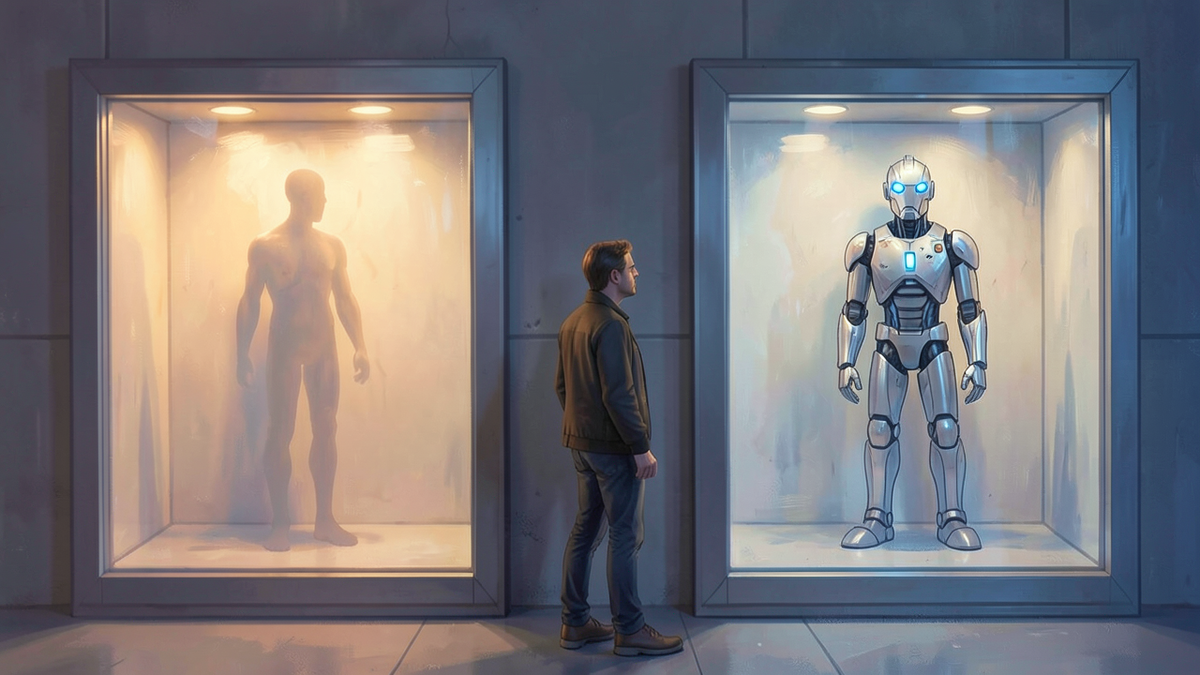
The asymmetry with humans runs through everything. We grant understanding to other people based on behavior alone. We infer that they comprehend because they act as though they comprehend. We resist extending the same inference to machines. Sometimes that resistance is well founded, because machines differ from us in ways that matter. Sometimes it looks like a preference for things that resemble us. Distinguishing the principled version of that resistance from the biased version is harder than it first appears.
Understanding may not be binary. The whole debate assumes a clean division: either the system understands or it doesn't. But understanding might come in degrees and kinds. A system could have genuine causal reasoning in some domains, shallow pattern-matching in others, partial self-knowledge, and flexible transfer in narrow contexts. The question "does it understand?" may be less useful than "in what ways, and how much?"
The stakes are practical and philosophical at once. In many contexts, whether a system understands is irrelevant: the output is useful regardless, and a human reviews it. In high-stakes contexts, it matters enormously, because trust without understanding is fragile in ways that only reveal themselves when the system fails. The metaphysics and the engineering are not separate problems.
What We've Learned Since 1980
When Searle wrote, AI was symbolic. Programs manipulated hand-coded rules, and the Chinese Room described them perfectly: a rulebook, a symbol shuffler, an output. Modern language models differ in ways that genuinely complicate the argument.
They learn their own rules from data rather than having them hand-coded. They develop internal representations no programmer designed. They exhibit capabilities that weren't explicitly trained, that emerge at scale. They engage with novel problems they've never encountered. Interpretability research has found structures inside them that look like models of the world: a system trained only to predict game moves developing an internal representation of the board it was never told exists.
Searle would likely say none of this matters. More complex rules are still rules. Emergent behavior is still behavior. Internal representations are still symbols being manipulated. The room got vastly larger and more sophisticated, but it's still a room, and no amount of scaling turns syntax into semantics.
The strongest response is that there may be a threshold where quantitative change becomes qualitative. Enough parameters, rich enough representations, sophisticated enough processing might cross a line from simulating understanding to instantiating it. We can't rule this out. We also can't confirm it. And that inability, rather than being a temporary gap, may be the permanent condition.
The Responses and Their Limits
The Chinese Room has drawn decades of replies. None has proven decisive, and the pattern of their failures is instructive.
The Systems Reply holds that the whole system understands, even if the person shuffling symbols doesn't. Understanding is a property of the system, not any part. Searle's answer: internalize the whole system, memorize every rule, and you still don't understand Chinese. The reply has force, since understanding might genuinely be a system-level property, but Searle's internalization move blunts it.
The Robot Reply holds that a body with senses would supply the missing grounding. Searle answers that adding cameras and motors doesn't change the computation. The robot still manipulates symbols according to rules. The reply points at something real about grounding, but a fancier room is still a room.
The Brain Simulator Reply holds that a perfect simulation of a Chinese speaker's neurons would understand. Searle answers that a perfect simulation of a rainstorm leaves everything dry. Simulating a process isn't performing it. The reply assumes that function is all that matters, which is precisely what Searle denies.
The Other Minds Reply is the one that cuts deepest, and it connects to hard solipsism. It points out that we can't prove other humans understand either. We infer their inner lives from behavior, never observing them directly. If we accept behavioral evidence for human understanding, why demand more for machines? Searle grants the point but notes it doesn't prove machines understand. It shows only that our evidence for human understanding is also behavioral.
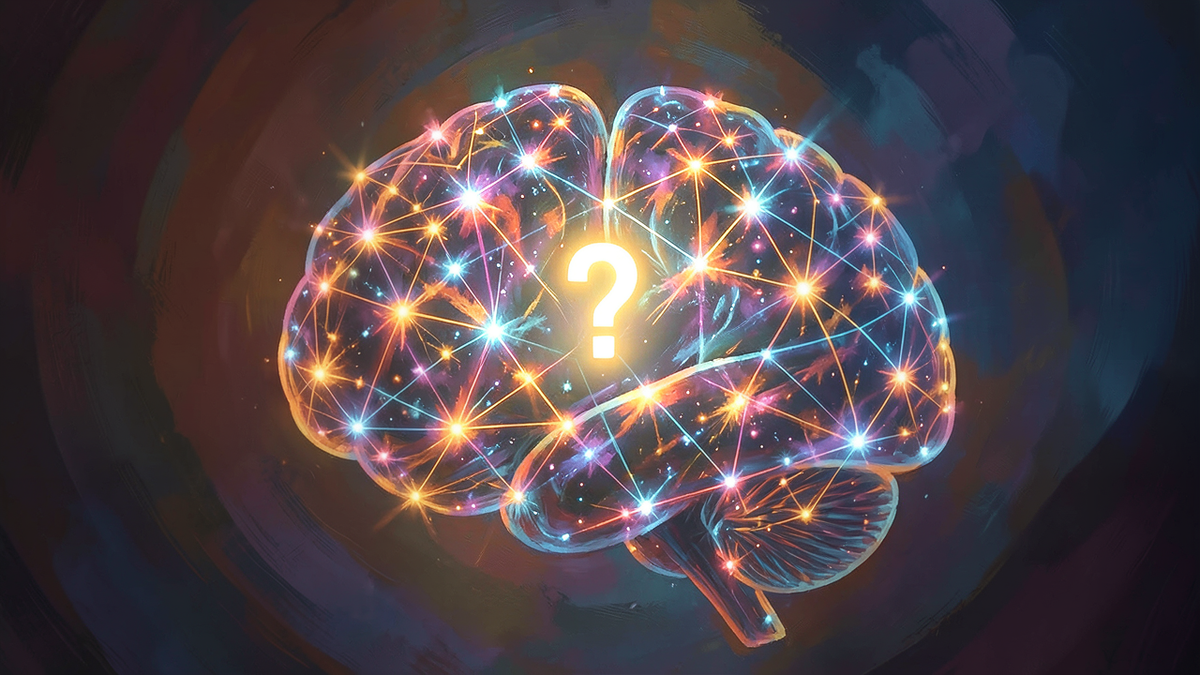
This is where the series arrived at its strangest insight. Solipsism, the position that only your own mind can be known to exist, is usually treated as a philosophical curiosity. But it exposes something real about the machine understanding debate. There is no vantage point from which any mind observes another mind's comprehension directly. We are always outside the room, whichever room it is. The person across the table is as sealed to us as the data center. We're confident about the person and skeptical about the machine, but the confidence and the skepticism rest on the same kind of evidence: behavior, similarity, and the practical impossibility of doubting.
Does this make the problem easier or harder? Both, in ways that don't cancel out. Easier, because it dissolves the double standard. If nothing clears the bar of proving understanding from the outside, then holding machines to that bar while exempting humans is inconsistent. We could extend to machines the same inferential courtesy we extend to each other, calibrated to the strength of the behavioral evidence. Harder, because it means our criteria were never tests for the presence of understanding. They were always grounds for attribution, reasons to treat something one way rather than another. The question "does it understand?" may have no discoverable answer, only a decision about how to respond to what we observe.
Practical Wisdom
The Chinese Room is often filed under abstract philosophy. It has concrete consequences for how we build and deploy these systems.
Design for uncertainty. We don't know whether AI understands. Build systems that work correctly whether it does or not. Avoid architectures that require the machine to understand in order to be safe. A system that depends on genuine comprehension to avoid catastrophe is a system built on an unverified assumption.
Preserve the understanding layer. In any system that matters, keep humans who understand in the loop. The machine generates, the human evaluates. If the machine is the Chinese Room, the human is the person who actually reads Chinese, the one who catches the error the room can't recognize because it doesn't know what the symbols mean. The danger arrives when we remove that human because the machine is "good enough."
Use precise language. "The AI thinks," "the AI believes," "the AI understands" all smuggle in the conclusion. Prefer "the model outputs," "the system generates," "the predictions suggest." The words we use shape the trust we extend, and anthropomorphic language quietly grants understanding that hasn't been established.
Calibrate trust to stakes. Low-stakes tasks with easy verification: trust the output directly. High-stakes tasks where errors compound and verification is hard: treat outputs as drafts, hypotheses, or suggestions requiring human judgment. The Chinese Room argument is a reason to scale skepticism to consequences.
Invest in interpretability. If we can't determine understanding from behavior, the internal structure of these systems is our best remaining evidence. Understanding what happens inside the model is the closest we can get to knowing whether anything is there. It won't settle the metaphysics, but it's more than we had.
Hold the question open. The honest position is neither "it obviously understands" nor "it obviously doesn't." Both overstate what we know. The wise stance is calibrated uncertainty: act carefully, monitor closely, keep humans in consequential loops, and stay genuinely open to the possibility that the answer changes as the machines change.
The Deeper Question
The Chinese Room's most unsettling implication isn't about machines. It's about us.
How do we know our own understanding isn't "just" symbol manipulation at a biological level? Neurons fire in patterns. Neurotransmitters cross synapses. Electrochemical signals propagate according to physical law. At the lowest level, the brain does something that looks a great deal like following rules and shuffling symbols. Where, in all that mechanism, does understanding enter? At what level of description does "neurons firing" become "I understand"?
Searle's answer, that biological systems have causal powers silicon lacks, satisfies few philosophers. It can sound like declaring victory by definition: brains understand because they're brains. The honest position may be that we don't fully understand our own understanding. We can't explain how subjective experience arises from neural activity. The hard problem of consciousness remains hard. And if we can't explain how understanding works in the one system we're certain has it, we should be humble about declaring that other systems definitely lack it.
This doesn't mean assuming machines understand. It means holding the question open with intellectual honesty. The Chinese Room is forty-six years old, and neither Searle's argument nor any reply has been defeated. That persistence isn't a sign that one side is simply wrong. It's a sign that the question is genuinely hard, that it touches something we don't understand about minds in general, including our own.
We live now with systems that might or might not understand what they're doing, and we will not resolve the question soon. The wise response is neither to assume they understand, which invites over-trust, nor to assume they don't, which underestimates both their capabilities and their risks. It is to act with appropriate uncertainty: deploying carefully, keeping humans in the loop where it counts, and remaining open to the possibility that the machines are becoming something we don't yet have the concepts to describe.
The person in the Chinese Room doesn't understand Chinese. But the room may be growing into something that does, and we cannot tell from outside. We never could tell from outside, not for the room, not for each other. That uncertainty isn't a problem to be solved. It's a condition to be lived with, thoughtfully, for a long time to come.
References
[1] John Searle, "Minds, Brains, and Programs," Behavioral and Brain Sciences, Vol. 3, No. 3, 1980, pp. 417-457. https://www.cambridge.org/core/journals/behavioral-and-brain-sciences/article/minds-brains-and-programs/DC644B47A4299C637C89772FACC2706A
[2] For a comprehensive overview of the argument, its responses, and the ongoing debate, see the Stanford Encyclopedia of Philosophy, "The Chinese Room Argument." https://plato.stanford.edu/entries/chinese-room/
[3] David Chalmers, "Facing Up to the Problem of Consciousness," Journal of Consciousness Studies, Vol. 2, No. 3, 1995, pp. 200-219. https://consc.net/papers/facing.html
[4] Anita Avramides, "Other Minds," Stanford Encyclopedia of Philosophy, 2019. https://plato.stanford.edu/entries/other-minds/
[5] Emily M. Bender, Timnit Gebru, Angelina McMillan-Major, and Shmargaret Shmitchell, "On the Dangers of Stochastic Parrots: Can Language Models Be Too Big? 🦜," Proceedings of the 2021 ACM Conference on Fairness, Accountability, and Transparency, 2021, pp. 610-623. https://dl.acm.org/doi/10.1145/3442188.3445922