Stochastic Parrots or Something More? LLMs and the Understanding Question

In 1980, when John Searle published the Chinese Room argument, AI meant expert systems: hand-coded rules that manipulated formal symbols according to human-written logic. The connection to the thought experiment was direct. An expert system literally was a room full of rules for shuffling symbols. Nobody seriously claimed it understood anything.
Today's large language models are different in ways that matter. They aren't programmed with rules. They learn statistical patterns from vast corpora of text. They develop internal representations that their creators didn't design and often can't fully explain. They exhibit behaviors that weren't explicitly trained, emerging only at certain scales of parameter count and data. They pass professional examinations, write working code for problems they've never encountered, and produce text that, in many contexts, people cannot distinguish from human writing.
And yet the structure of what they do is hauntingly familiar. Tokens come in. They are processed according to learned patterns. Tokens go out. The question Searle asked in 1980 is the same question we face now: does the quality of the output tell us anything about the presence of understanding?
The Stochastic Parrot Critique
In 2021, Emily Bender, Timnit Gebru, and colleagues published "On the Dangers of Stochastic Parrots," arguing that language models are essentially sophisticated text generators that produce plausible-sounding language without understanding what it means.[1] The term "stochastic parrot" captures the critique precisely: a parrot can produce speech that sounds meaningful to listeners without possessing any understanding of what the sounds refer to. The parrot operates on acoustic patterns. The language model operates on token-level statistical patterns. In both cases, the output mimics understanding without (the critics argue) constituting it.
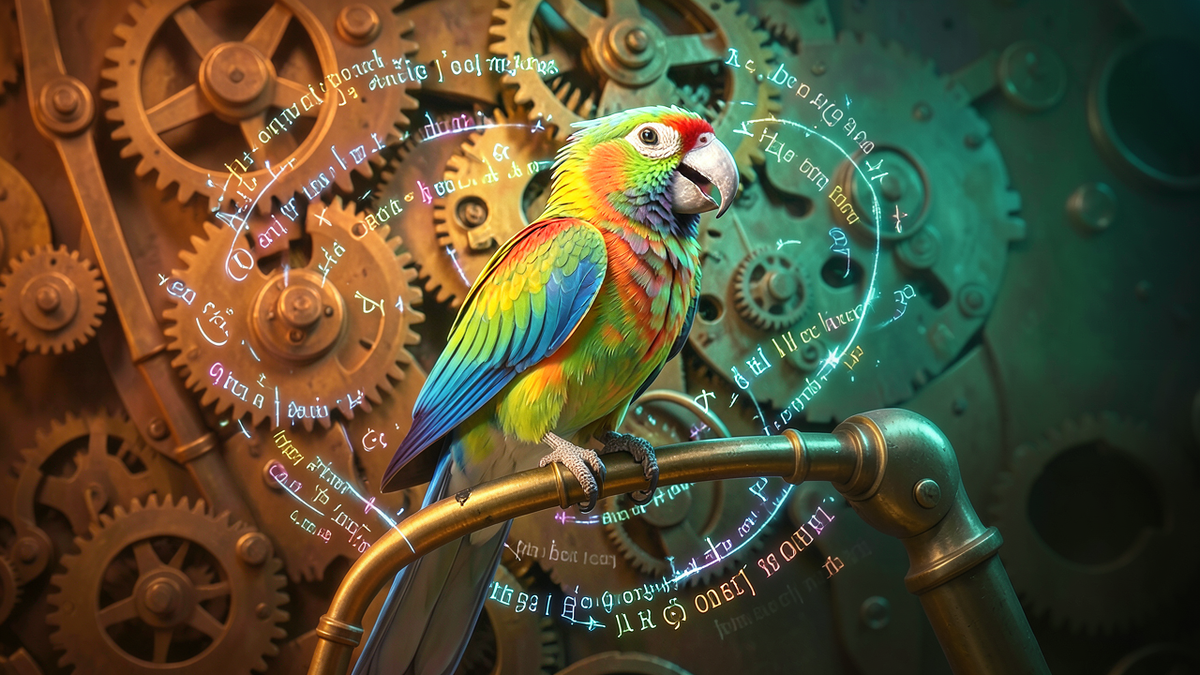
The stochastic parrot framing maps directly onto Searle's Chinese Room. The model receives input tokens (Chinese characters slid under the door), processes them according to learned patterns (the rulebook), and produces output tokens (the Chinese response passed back out). The outputs may be indistinguishable from those of a system that understands. The internal process, on this view, is fundamentally different: pattern completion rather than comprehension.
The strongest version of this critique argues that no amount of statistical pattern learning can produce understanding, because understanding requires something statistics cannot provide: a connection between symbols and what they represent. The model knows that certain tokens tend to follow certain other tokens. It doesn't know what those tokens mean in the way a speaker knows what their words mean.
The Case That Something More Is Happening
The counter-argument is substantial and growing.
In 2023, researchers at Microsoft published a 155-page analysis of GPT-4 titled "Sparks of Artificial General Intelligence," arguing that the model demonstrated capabilities that go beyond pattern matching in important ways: solving novel problems, reasoning across domains, and exhibiting what the authors called "a high degree of competence at many tasks that arguably require understanding."[2]
GPT-4 passed the Uniform Bar Examination, scoring approximately 297 out of 400, placing it around the 90th percentile of human test-takers.[3] It passed medical licensing examinations, advanced placement tests, and graduate-level assessments across multiple domains. These exams were designed to test understanding, not just recall. They require applying principles to novel fact patterns, reasoning through ambiguity, and distinguishing relevant from irrelevant information.

Mechanistic interpretability research has revealed that language models develop internal structures that look like representations of the world. A model trained only to predict the next move in Othello games, with no knowledge of the rules or the board, develops an internal representation of the board state that researchers can extract and use to predict legal moves.[4] The model was never told the board exists. It inferred the structure from sequences of moves alone. Is that understanding, or just extremely sophisticated pattern completion?
The emergent capabilities argument pushes further. Certain abilities appear only in models above a threshold of scale: multi-step reasoning, analogical transfer, theory-of-mind-like behavior, self-correction. These capabilities weren't explicitly trained. They emerged from the interaction between sufficient parameters and sufficient data. If understanding is an emergent property of sufficiently complex information processing, then perhaps it's emerging in these systems in ways we don't yet fully recognize.
The Asymmetry Problem
There's an uncomfortable asymmetry in how we apply the understanding question.
We grant understanding to other humans based entirely on behavioral evidence. We have no direct access to anyone else's subjective experience. We observe their behavior, their language, their responses to novel situations, and we infer understanding. We've never required proof of inner experience from another person before treating them as a mind. The behavior is sufficient.
With machines, we reverse the standard. No amount of behavior is sufficient. Pass every exam, solve every novel problem, explain every joke, navigate every ambiguity, and the response is still: "but does it really understand?" The Chinese Room argument provides the philosophical justification for this asymmetry. But is the asymmetry itself justified, or does it reflect an assumption about the substrate (biology) rather than the process (information processing)?
Searle's answer is explicit: biology matters. The brain has "causal powers" that produce understanding, and silicon does not have those powers, regardless of what program it runs. This is biological naturalism: understanding is a product of specific physical processes, not just any process that produces the right outputs.
The functionalist response: if it does everything an understanding system does, in every context, then the substrate is irrelevant. Understanding is what understanding does. Carbon chauvinism, the assumption that only biological systems can understand, is no more justified than the assumption that only feathered things can fly.
What the Room Doesn't Settle
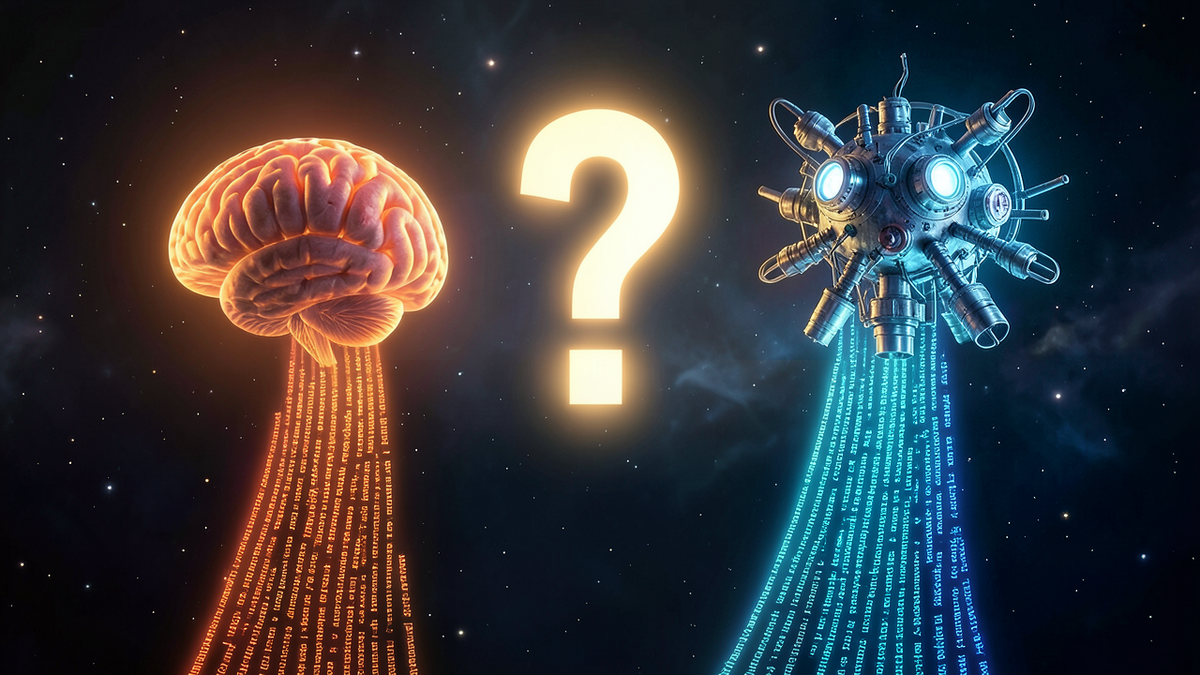
The Chinese Room argument proves that perfect behavioral output is logically compatible with zero understanding. It doesn't prove that current LLMs lack understanding. It shows that we can't conclude they understand from their outputs alone. These are different claims.
The honest position acknowledges genuine uncertainty. We don't know whether LLMs understand anything. We don't have a test that would settle the question. The behavioral evidence is impressive but, as Searle showed, logically insufficient. The internal structure evidence (world models, emergent representations) is suggestive but not conclusive. The absence of grounding in sensory experience is concerning but not necessarily disqualifying.
What we can say with confidence: if LLMs don't understand, they are the most convincing simulacra of understanding ever produced, and they require us to be precise about what we mean by "understand." If they do understand, they understand differently from us: without bodies, without sensory experience, without development, without the biological architecture that produces human cognition.
Either way, the practical question remains: how should we relate to systems whose understanding we can't verify? The Chinese Room doesn't give us an answer. It gives us the precision to ask the question correctly. And it warns us that impressive performance, however extraordinary, is not the same as proof of mind.
References
[1] Emily M. Bender, Timnit Gebru, Angelina McMillan-Major, and Margaret Mitchell, "On the Dangers of Stochastic Parrots: Can Language Models Be Too Big? 🦜," Proceedings of the 2021 ACM Conference on Fairness, Accountability, and Transparency (FAccT), March 2021. https://dl.acm.org/doi/10.1145/3442188.3445922
[2] Sébastien Bubeck et al., "Sparks of Artificial General Intelligence: Early Experiments with GPT-4," Microsoft Research, March 2023. https://www.microsoft.com/en-us/research/publication/sparks-of-artificial-general-intelligence-early-experiments-with-gpt-4/
[3] Daniel Martin Katz, Michael James Bommarito, Shang Gao, and Pablo Arredondo, "GPT-4 Passes the Bar Exam," March 2023. https://papers.ssrn.com/sol3/papers.cfm?abstract_id=4389233 See also Reuters, "Bar exam score shows AI can keep up with 'human lawyers,' researchers say," March 15, 2023. https://www.reuters.com/technology/bar-exam-score-shows-ai-can-keep-up-with-human-lawyers-researchers-say-2023-03-15/
[4] Kenneth Li et al., "Othello-GPT: Exploring a Sequence Model Trained on a Synthetic Task," arXiv, 2022 (revised 2023). The researchers found that a GPT model trained solely on Othello move sequences developed an emergent internal representation of the board state. https://arxiv.org/abs/2210.13382