Consensus in Chaos: How Randomness Holds Distributed Systems Together

In the early 1970s, Bob Metcalfe and David Boggs were working on what would become Ethernet at Xerox PARC. They faced a problem that would become fundamental to networked computing: what happens when two devices try to send data at the same time on a shared wire? The signals collide, and both transmissions are corrupted.
The obvious solution is to have each device wait and try again. But if both devices wait the same amount of time, they'll collide again. And again. And again. The system deadlocks because both participants are behaving identically and deterministically.
Metcalfe and Boggs's solution, described in their 1976 paper, was to introduce randomness. After a collision, each device waits a random amount of time before retransmitting. The randomness breaks the symmetry: it's unlikely that both devices will choose the same delay, so one will transmit first and the other will find the channel clear. If they collide again, the range of possible delays doubles, making repeated collisions exponentially less likely. The technique became known as exponential backoff.[1]
It became an early and influential example of a principle that would prove essential to distributed computing: when deterministic coordination fails, randomness can succeed.

The Symmetry Problem
Distributed systems face a coordination challenge that centralized systems don't. When multiple independent machines need to agree on something, whether it's which server handles a request, what order transactions occur in, or who gets to write to a shared resource, they need a way to break ties. In a centralized system, a single authority decides. In a distributed system, there's no single authority. Every node is equal.
This equality is the problem. If every node follows the same deterministic algorithm with the same inputs, they'll all make the same decision at the same time, which often means they'll all try to do the same thing simultaneously, leading to contention, deadlock, or split-brain scenarios.
Randomness solves this by introducing asymmetry. If each node makes a random choice, the choices will typically differ, and the system can proceed. The randomness doesn't need to be cryptographically secure or even particularly high quality. It just needs to be different across nodes, which even a simple pseudorandom generator seeded with a local timestamp or process ID can provide.
This is a philosophical inversion of how we usually think about randomness. In most contexts, randomness is a source of disorder, something to be minimized or controlled. In distributed systems, randomness is a source of order. It breaks deadlocks, resolves contention, and enables coordination among peers that have no other way to differentiate themselves.
Leader Election and Consensus
One of the most fundamental problems in distributed computing is leader election: choosing a single node to coordinate some activity when no node has a pre-assigned role. The problem is deceptively hard. In 1985, Michael Fischer, Nancy Lynch, and Michael Paterson proved that in an asynchronous distributed system where even one node might fail, no deterministic algorithm can guarantee consensus. This result, known as the FLP impossibility theorem, demonstrated a fundamental limit on what deterministic coordination can achieve.[2]
Randomized algorithms offer a way around this impossibility. By allowing nodes to make random choices, consensus protocols can achieve agreement with high probability, even in the presence of failures. The guarantee is probabilistic rather than absolute: there's always some chance the algorithm takes longer than expected, but the probability of failure decreases exponentially with time.
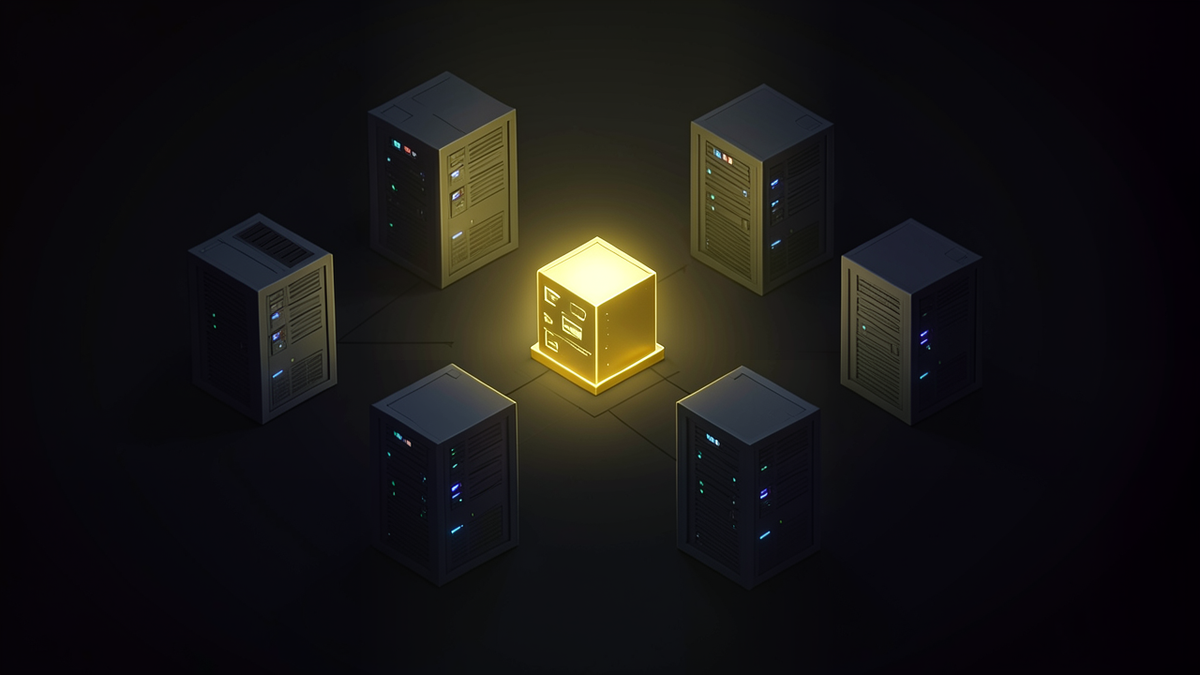
The Raft consensus algorithm, widely used in modern distributed databases and coordination services, uses randomized timeouts for leader election. When a cluster loses its leader, each remaining node waits a random amount of time before declaring itself a candidate. The randomness makes it likely that one node will time out before the others, claim leadership, and receive confirmation from a majority before any competitor emerges. Without the random timeout, nodes would tend to declare candidacy simultaneously, splitting the vote and forcing repeated elections.[3]
Chaos Engineering: Randomness as a Test
In 2011, engineers at a major streaming platform publicly described a tool they had built called Chaos Monkey. According to their blog post, the tool randomly terminated production server instances during business hours. The purpose, they explained, was to force engineering teams to build systems that could survive the unexpected loss of any component at any time.[4]
The philosophy behind chaos engineering is that failures in distributed systems are inevitable. Servers crash, networks partition, disks fill up, and processes hang. The argument, as proponents of chaos engineering describe it, is that if you wait for these failures to happen naturally, they tend to occur at inconvenient times. By injecting random failures deliberately and continuously, you can discover weaknesses before they matter.
This is randomness as a stress test. The random selection of which instances to kill ensures that no component gets special treatment. Every service must be resilient, because any service might be the next one terminated. The randomness also prevents engineers from gaming the system: you can't harden just the components you expect to fail if you don't know which ones will be targeted.
The broader discipline that emerged, chaos engineering, has reportedly been adopted by numerous organizations across the technology industry. The core principle is that controlled, random disruption reveals systemic weaknesses that careful analysis might miss. It's an empirical approach to reliability: instead of trying to prove a system is robust through reasoning alone, you test it by breaking things randomly and seeing what happens.
Probabilistic Data Structures
Randomness in distributed systems isn't limited to coordination and testing. It also enables data structures that trade perfect accuracy for dramatic improvements in efficiency.
A Bloom filter, first described by Burton Howard Bloom in 1970, is a probabilistic data structure that can tell you whether an element is definitely not in a set, or probably in a set. It uses multiple hash functions to map elements to positions in a bit array. To check membership, you hash the element and check whether all the corresponding bits are set. If any bit is zero, the element is definitely not in the set. If all bits are set, the element is probably in the set, but there's a chance of a false positive.[5]
The trade-off is remarkable: a Bloom filter can represent set membership using a fraction of the memory that a complete list would require, at the cost of a small, controllable false positive rate. Bloom filters are commonly used in distributed systems. Databases may use them to avoid unnecessary disk reads. Content delivery networks can use them to track which objects are cached. Distributed caches can use them to coordinate which nodes hold which data.
HyperLogLog, another probabilistic data structure, estimates the number of distinct elements in a dataset using a fixed amount of memory regardless of the dataset's size. It works by hashing elements and observing patterns in the hash values that are statistically related to the cardinality of the set. The estimate isn't exact, but with standard implementations, the error is typically within a few percent.[6]
These structures embody a pragmatic philosophy: perfect answers are expensive, and approximate answers are often good enough. The randomness in the hash functions is what makes the approximation work. It distributes elements uniformly across the structure, ensuring that the statistical properties the algorithms depend on actually hold.
Load Balancing and Shuffle Sharding
When a distributed system receives millions of requests, it needs to distribute them across servers. The simplest approach is round-robin: send the first request to server one, the second to server two, and so on. But round-robin doesn't account for varying request costs, server capacities, or failure patterns.
Random load balancing, where each request is sent to a randomly chosen server, is surprisingly effective. Research has shown that even simple random assignment produces reasonably balanced loads, and a technique called "the power of two random choices" improves this significantly: instead of choosing one random server, you choose two and send the request to whichever is less loaded. This small change, according to the foundational analysis by Michael Mitzenmacher, reduces the maximum load from logarithmic to doubly logarithmic in the number of servers, a dramatic improvement from a minimal increase in complexity.[7]
Shuffle sharding takes randomness further. Instead of assigning each customer to a single shard or partition, you assign them to a random subset of shards. If one shard fails, only customers whose random subset included that shard are affected. The probability that two customers share the exact same subset decreases rapidly with the subset size, so failures are naturally isolated. The randomness creates a kind of probabilistic blast radius: no single failure can affect all customers, and the expected impact of any failure is bounded.
Order from Chaos
There's a recurring pattern across all these applications: randomness creates order. Random backoff resolves collisions. Random timeouts elect leaders. Random failures reveal weaknesses. Random hashing enables efficient approximation. Random assignment balances load.
This is counterintuitive. We tend to think of randomness as the opposite of order, as noise, chaos, unpredictability. But in distributed systems, determinism is often the source of problems. Deterministic algorithms produce correlated behavior: all nodes do the same thing at the same time, creating contention, herding, and cascading failures. Randomness decorrelates behavior, spreading actions across time and space, reducing the chance that multiple components fail in the same way simultaneously.
The philosophical lesson is that coordination doesn't always require communication. Sometimes it just requires that participants behave differently from each other, and randomness is the cheapest way to achieve that. You don't need a central authority to break a tie if each participant flips their own coin.
Distributed systems have discovered, through decades of engineering practice, what the ancient atomists intuited: sometimes you need a random swerve to break a deadlock. The swerve isn't a flaw. It's what makes the system work.
References
[1] Robert M. Metcalfe and David R. Boggs, "Ethernet: Distributed Packet Switching for Local Computer Networks," Communications of the ACM, 19(7), 395–404, 1976. https://en.wikipedia.org/wiki/Exponential_backoff
[2] Michael J. Fischer, Nancy A. Lynch, and Michael S. Paterson, "Impossibility of Distributed Consensus with One Faulty Process," Journal of the ACM, 32(2), 374–382, 1985. https://groups.csail.mit.edu/tds/papers/Lynch/jacm85.pdf
[3] Diego Ongaro and John Ousterhout, "In Search of an Understandable Consensus Algorithm," USENIX Annual Technical Conference, 2014. https://raft.github.io/raft.pdf
[4] "Netflix lets free simian software for cloud chaos," The Register, August 3, 2012. https://www.theregister.com/2012/08/03/netflix_chaos_monkey/
[5] Burton H. Bloom, "Space/Time Trade-offs in Hash Coding with Allowable Errors," Communications of the ACM, 13(7), 422–426, 1970. https://en.wikipedia.org/wiki/Bloom_filter
[6] Philippe Flajolet et al., "HyperLogLog: the analysis of a near-optimal cardinality estimation algorithm," Discrete Mathematics and Theoretical Computer Science, 2007. https://en.wikipedia.org/wiki/HyperLogLog
[7] Michael Mitzenmacher, "The Power of Two Choices in Randomized Load Balancing," IEEE Transactions on Parallel and Distributed Systems, 12(10), 1094–1104, 2001. https://en.wikipedia.org/wiki/2-choice_hashing